Pasta and Grains
Cooking pasta ahead so it reheats without going gluey

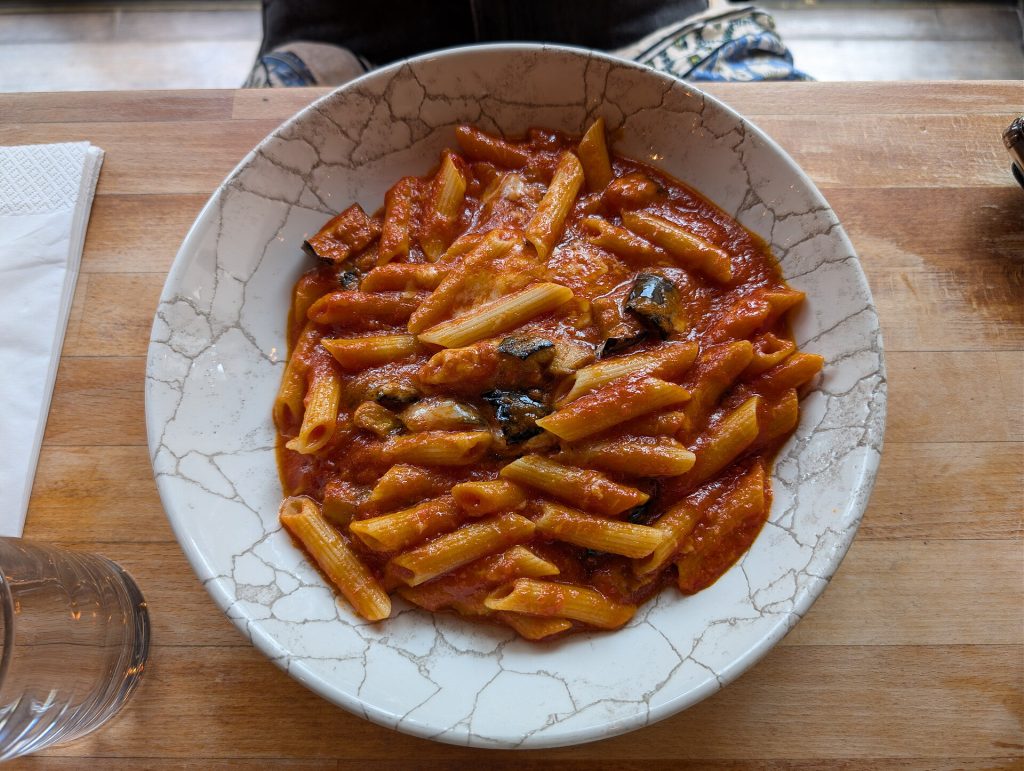
The usual method for pasta cooked ahead is to pull it a minute early and shock it in cold water. The cold water does stop the cooking. It also leaves the pasta in the worst state it can be in for a fridge.
What comes back two days later is soft on the outside, hard in the middle, and sticky enough to clump in the container. That is not a reheating problem. It is decided in the ten minutes after the colander.
Two things cause it. Water left on the surface, and surface starch that has set into a gel while it was still wet.
Both are avoidable without buying anything, and the fix takes less time than the cold water method it replaces.
Why the cold shock only solves half the problem
Boiling gelatinizes the starch on the outside of the pasta. That starch is fully swollen when the pasta comes out of the pot, and it holds a lot of water.
Plunging it into cold water stops the interior from overcooking, which is the point. The surface, though, goes from hot and loose to cold and set in about thirty seconds.
The gel that forms is firm and slightly glassy. In the fridge it tightens further, and that is the hard shell you feel on a leftover piece before it warms up.
The water is the second half. Pasta pulled from a cold bath is wet, and it goes into a container wet. Over a day the surface layer absorbs more of that free water and turns soft.
Reheating then overcooks the outside before the middle is warm. The middle stays chalky because it never got enough water in the first place, since it was pulled early.
The cold bath is not useless. It is simply doing one job and being credited with two.
There is a version of the method that works better. Drain the pasta, let it sit in the colander for a few seconds so the steam clears, then spread it on a tray while it is still hot.
Hot pasta dries fast. Ten minutes on a tray takes off more water than a minute in a cold bath, and it does it without setting the surface into a hard gel.
The oil film and what it does to the sauce
Tossing drained pasta with oil is the other common habit, and it solves a problem that only exists if the pasta is stored wet.
Oil on the surface is a barrier. Sauce, which is mostly water and fat, has to push through it, and it usually does not. The result is pasta with sauce pooled underneath it.
The oil also seals water against the pasta. A film of oil on a wet surface keeps that water where it is, which is the opposite of what the storage needs.
For a cold pasta salad the oil is part of the dish and the logic is different. For pasta that will be reheated with a sauce, the oil works against the sauce.
If the pasta is going to sit more than a day, a teaspoon of oil for a pound is enough to stop sticking, and it should go on a surface that has already been dried.
How far to undercook for a given finish
The right amount to pull early depends on how the pasta will come back, not on a general rule. Three finishes need three different stopping points.
For pasta that will be tossed in a hot pan with sauce, stop two minutes short of the bite you want. The pan finish adds the rest, and the pasta takes up sauce as it does.
For baked pasta, stop three minutes short and drain it wetter than usual. It will spend twenty minutes in an oven and it needs the water to survive that.
For a cold salad, cook it fully and do not shock it. Cold pasta firms up in the fridge, so pasta pulled early for a salad ends up tough.
Judge by the bite, not the packet. Packets are written for a range of thicknesses, and the difference between eight and eleven minutes is the whole margin.
A thin strand like spaghetti needs less margin than a shape with thick walls. Two minutes is a third of a spaghetti’s cook time and a fifth of a rigatoni’s.
For shapes, cut one open. The center should be a shade darker than the outside when it leaves the pot, and that faint line is what the second cooking finishes.
Write the number on the container if the pasta is for later in the week. Two minutes is easy to forget by Thursday.
Cooling fast and storing without water
The step that decides the result is spreading the pasta out. A tray, a sheet pan, anything with a large flat surface and a little airflow.
Spread it in a single layer and leave it for ten minutes, turning it once at the halfway point. Steam coming off the pile is water that would otherwise end up in the container.
A single layer matters more than the ten minutes. Piled pasta cools at the edges and stays warm in the middle, and the middle is where the clumps form.
Do not run cold water through the pasta on the tray to speed this up. The same gel problem returns, and the surface is soaked again so the tray stops drying it.
What you want at the end is pasta that feels dry and slightly tacky, not wet and not oily. In that state the surface gel has tightened without trapping free water.
Then pack it. A container with the lid left ajar until it is fully cool avoids the condensation that forms on a warm lid and drips back down.
Portion it while it is on the tray, not after it is in the container. A pound of pasta is about four portions, and separating them cold means breaking clumps.
Reheating in the sauce rather than in water
Dropping stored pasta into boiling water is the fastest way to undo the work. The water washes off the surface, the second boil overcooks the outside, and the pasta comes back flavourless.
Heat the sauce in a wide pan until it bubbles at the edges, then add the pasta straight from the fridge. Add two tablespoons of hot water, cover, and wait ninety seconds.
If the sauce is thick enough to sit in a mound, loosen it before the pasta goes in. Pasta added to a stiff sauce grabs it in patches instead of taking a coat.
The steam does the warming and the sauce does the seasoning. Uncover, toss hard for thirty seconds, and the sauce thickens onto the pasta as the surface starch loosens again.
With no sauce, use a hot pan with a teaspoon of fat and a splash of water. The water turns to steam under a lid and the fat keeps the surface from drying.
A microwave works if the pasta is covered with a damp sheet of paper and run at reduced power. Full power heats the edges of the pile and leaves the middle cold.
Either way, the pasta wants to be hot through in about two minutes. If it needs five, it went into the container too wet.
How long it keeps and what changes after that
Dry, unsauced pasta keeps three days in a sealed container. Past that it does not spoil quickly, but the surface turns from tacky to slippery and the bite goes soft.
Sauced pasta keeps two days, and it behaves better on the second day than plain pasta does, because the sauce holds water away from the surface starch.
Freeze pasta only in sauce. Plain frozen pasta thaws with a wet, mealy surface that no amount of pan time repairs, and it breaks into short pieces in the bag.
Reheat a frozen block in a covered pan over low heat with a splash of water. It takes about eight minutes and needs one turn, or the base scorches before the middle thaws.
Pasta older than three days belongs in a bake rather than a pan. A hot oven and a wet sauce hide a soft surface that a quick toss will not fix.
Tonight, cook a pound of pasta, drain it two minutes early, spread it on a tray for ten minutes, and refrigerate it dry in four portions. Tomorrow it goes straight into a hot pan.