Prep and Storage
Refrigerator pickles in a weeknight timeframe

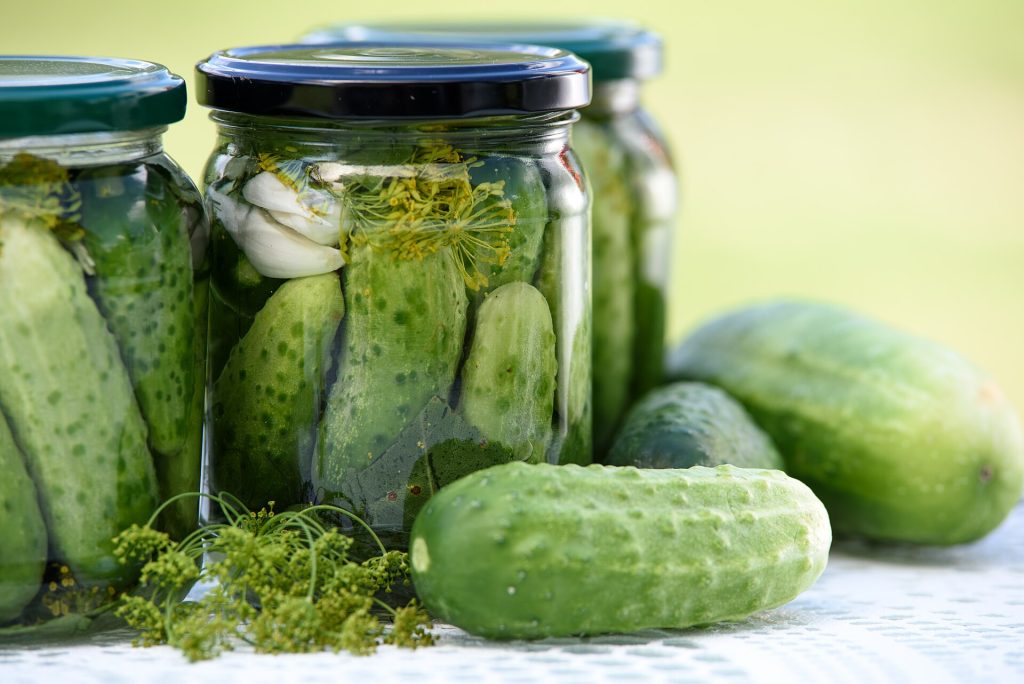
Refrigerator pickles do not need a week, a canning pot or a cupboard full of equipment. Most vegetables are worth eating within an hour and at their best by the next evening.
The long timelines people remember come from shelf stable pickling, where the jar has to be processed and the acid has to reach the center of a sealed pack. A jar that lives in the fridge is a different job.
What that job needs is a brine strong enough to keep, vegetables cut small enough to take it up quickly, and a jar clean enough to hold them for a few weeks.
What the brine is doing in the first hour
Two things happen at once when a vegetable goes into a vinegar brine. Salt pulls water out through the cell walls, and vinegar moves in to replace it.
That exchange is what turns a raw cucumber into a pickle. The vegetable loses its raw crunch and gains a firm, glassy texture, and the liquid inside it changes from water to brine.
Salt is doing structural work, not just seasoning. A vegetable that gives up some water firms up instead of going soft, which is why a salted pickle keeps its snap longer than one dropped straight into vinegar.
Acid is doing the preserving. At the acidity of a normal pickle brine, the organisms that spoil food cannot grow, which is what allows a jar to sit in the fridge for weeks rather than days.
Everything else, the dill, the garlic, the peppercorns, is flavor. It travels into the vegetable more slowly than salt does, which is why a pickle tastes better on day two than on day one.
Temperature matters as well. A cucumber straight from the fridge takes up brine more slowly than one at room temperature, so let the cut pieces sit out for ten minutes first.
The ratio that keeps working
Equal parts vinegar and water by volume, with about two percent salt by total weight, is the base. That is roughly twenty grams of salt per liter of liquid, or a heaped tablespoon.
Use vinegar at five percent acidity, which is what most plain white and cider vinegars are. A weaker vinegar or a home made one of unknown strength will not hold the jar.
Do not go past one part vinegar to one part water to stretch the brine. More water means less acid, and less acid means a pickle that spoils in the fridge instead of keeping.
Stronger brine is fine and gives a sharper pickle. Two parts vinegar to one part water is the upper end, and it is the right choice for onions and chilies that will be used in small amounts.
A teaspoon of sugar per jar rounds off the edge of the acid without making the pickle sweet. It is optional, and it matters most with cabbage and carrot, which turn harsh without it.
Vinegar quality matters less than vinegar strength. A plain white vinegar at five percent pickles as well as an aged one, and its neutral flavor leaves room for the dill.
Salt by weight is more reliable than salt by spoon, because the crystal size of what is in the cupboard varies enough to double the amount in a tablespoon.
Cutting so it happens tonight
Time to pickle is mostly a function of distance. A whole cucumber needs weeks to be reached by brine, a three millimeter slice needs twenty minutes.
Slice cucumbers into coins or quarter them into spears about a centimeter across. Spears take a few hours, coins take a few, and both are ready to eat before bedtime.
Onions want to be thin, either sliced into half moons or cut into petals. Twenty minutes in a hot brine is enough to take the raw heat out and leave them pink and sharp.
Cabbage should be shredded finely, then salted and squeezed before the brine goes on. That step removes a lot of water and lets the brine in much sooner.
Carrots and other dense roots need to be cut into thin sticks or ribbons. A thick carrot coin will still be raw in the middle on day three while the outside is fully pickled.
Surface area also decides how much brine you need. A tightly packed jar of thin slices takes less liquid than a loose jar of chunks, and the liquid has to cover everything.
Hot brine, cold brine and the crunch
Hot brine penetrates faster and softens the vegetable as it goes. Poured over onions or cabbage, it produces something ready in twenty minutes and pleasant for a week.
Cold brine keeps the vegetable firmer and takes two or three times as long to do the same work. For cucumber spears that are meant to crunch, cold is the better choice if you can wait until tomorrow.
A middle route works well on a weeknight. Heat the brine to dissolve the salt and sugar, then cool it with ice before pouring, so the liquid is cold but fully seasoned.
An ice water bath before the brine helps as well. Soaking cut vegetables in iced water for fifteen minutes firms the cell walls, and they hold that firmness through the pickle.
Hot brine also shrinks the vegetable on contact, which is why a jar packed with hot brine looks half empty the next morning. Pack loosely and top up with brine after an hour.
The jar holds heat as well. Brine poured hot into a cold glass jar can crack it, so warm the jar with tap water first and pour slowly down the side.
What to pickle and how long it takes
Cucumber coins in hot brine are edible in thirty minutes and good in four hours. Spears in cold brine need six to eight hours, and they are better on the second day.
Red onion is the fastest return in a kitchen. Thinly sliced, covered in hot brine, it is ready in twenty minutes and keeps its color for two weeks in the fridge.
Shredded cabbage takes about two hours to soften and a day to taste finished. Salted first and squeezed, it makes a sharp, crunchy pile for sandwiches and bowls.
Carrot ribbons and thin sticks need four hours to a day. They stay crisp far longer than cucumber does, and they are the pickle that survives to the end of the jar.
Radish, fennel, green beans and chilies all work on the same brine. Radish slices take an hour, green beans two days, and whole chilies a week if you want them properly hot.
Cauliflower sits between cabbage and carrot. Florets are ready in a day and still crisp at two weeks, and the stem takes the brine last.
Boiled eggs, if you pickle them, need at least two days and are better at five. They are the one thing here that will not be ready tonight.
Keeping the jar in order
Everything has to stay under the brine. A vegetable poking above the surface oxidizes, browns and eventually grows a film, and the fix is a crumpled piece of parchment or a small weight.
A clean jar matters more than a sterilized one for fridge pickles, because the cold and the acid are doing the preserving. Wash it in hot soapy water and let it dry fully.
Keep the jar at the back of a shelf rather than in the door, where the temperature swings every time someone opens it. A steady four degrees keeps the texture and the color longer.
Cucumber pickles are at their best for two weeks and acceptable for three. Onion, carrot and cabbage hold for a month, and the brine gets sharper as they sit.
Do not top up an old jar with fresh brine or fresh vegetables. The used brine has given up its acid and taken on water from the vegetables, and the new batch will not keep.
Tonight, slice a cucumber thinly, toss it with a teaspoon of salt in a bowl, and leave it for ten minutes while you heat half a cup of vinegar with half a cup of water and a teaspoon of sugar.
Cool that brine with a few ice cubes, drain the cucumber, and pack both into a clean jar with a smashed garlic clove. It will be worth eating in half an hour.