Pasta and Grains
Orzo as a dinner base instead of a soup garnish

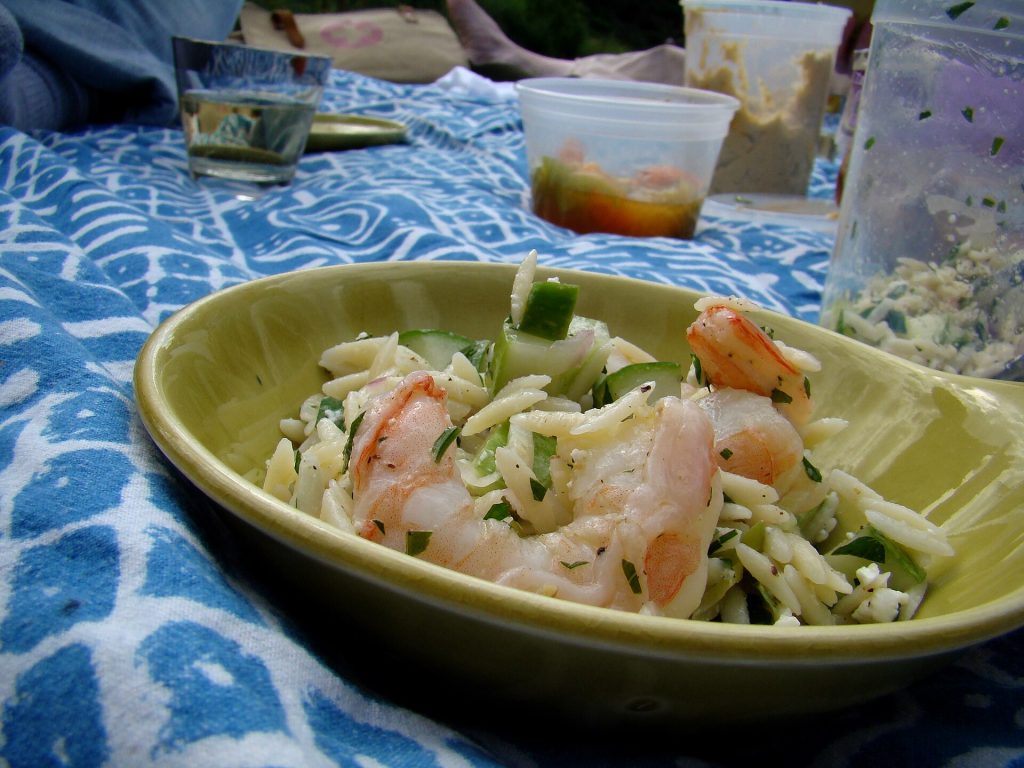
Orzo is usually treated as a handful of something to drop into soup, added straight from the bag and left to swell in the broth. That use hides what the shape can do.
Orzo is pasta, pressed into a grain the size and roughly the shape of a large rice grain. Cooked as a base rather than a garnish, it behaves like a risotto grain with a pasta bite.
The reason it rarely gets the chance is that it overcooks faster than any other shape and turns to porridge if it is left a minute too long, so cooks treat it as a thickener instead.
Handled with a shorter cook, less water and a little fat, it carries a sauce better than rice does and holds a shape that forks separate cleanly.
Why orzo turns to porridge
The shape has a high surface area for its volume, so a large share of the grain is exposed to water at once. Starch leaves it faster than it leaves a tube or a shell.
That starch clouds the cooking liquid within two minutes. If the liquid is the sauce, the sauce thickens on its own before the orzo is anywhere near done.
The cook is also short. Seven to nine minutes for a dry orzo, and the window between firm and soft is about ninety seconds wide.
Residual heat keeps working after the pan comes off the stove. A batch drained while it still has a bite will be soft by the time it reaches the table.
Overcrowding makes it worse. A shallow layer of orzo in a wide pan cooks evenly, and a deep pile cooks unevenly and sticks into blocks.
The shape also makes it hard to judge by eye. Grains that look wet and loose in the pan set into a solid mass within a minute of leaving it.
The starch also settles. Left without a stir in the first minute, orzo sinks into a layer on the base, and the bottom of that layer cooks twice as fast as the top.
None of this is a reason to avoid the shape. It is a reason to treat the last two minutes as the part that matters.
Toasting before the liquid goes in
The step that changes the result most is the one most recipes skip. Toast the dry orzo in fat before any liquid touches it.
Two minutes in a wide pan with a tablespoon of oil, stirred a few times, until some grains take on a light brown edge. The color is the signal, not the clock.
Toasting dries the surface and sets it slightly, so the grain releases starch more slowly and stays separate for longer in the pan.
It also builds flavor that the plain boil cannot. The browned pasta tastes of toast and nuts, which is why a pilaf made this way needs less seasoning later.
Do the toasting in the pan the orzo will cook in. Moving it to a second pan loses the film of fat and the browned bits that carry the flavor.
The fat matters less than the heat. Olive oil, butter or a mixture all work, though butter will darken faster and needs a lower flame.
Toasted orzo also takes about a minute longer to cook and drinks slightly more stock. Both follow from the firmer surface the toasting creates.
Do not take the color too far. The grain is small and its outside is thin, and a fully browned orzo tastes bitter once the stock goes on.
Cooking it like a pilaf
One cup of orzo takes about two cups of hot stock when it is toasted first, and slightly less when it is not.
Add the stock in two stages. Pour in most of it, bring it to a simmer, and keep the rest hot to add in the last three minutes if the pan looks dry.
Keep the heat at a steady simmer and leave the pan uncovered. A lid traps steam and softens the surface, and the evaporation is part of how the dish concentrates.
A wide pan also lets the liquid reduce across the whole surface, so the sauce thickens by evaporation rather than by starch alone.
Stir twice, not constantly. One stir after the first minute keeps the base free, and one at the end brings the starch up into the liquid.
Salt the stock rather than the finished dish. Orzo takes up a lot of liquid, and salt added at the end sits on the outside of the grain.
Taste at seven minutes. The grain should be firm at the center with a little resistance, and the liquid around it should look like a loose sauce rather than a soup.
The sauce problem
A sauce that suits spaghetti is too thick for orzo, because the grain keeps drinking liquid after it leaves the pan.
Make the sauce looser by about a third. Add stock or the pasta water to the sauce before the orzo goes in, and let it come back to a simmer.
Fold the orzo in off the heat. On the heat, the starch release doubles and the sauce tightens past the point where it coats.
Fat at the end keeps the grains sliding past each other. A knob of butter or a spoon of olive oil, folded in last, gives the dish a gloss that a wet sauce alone does not.
Cheese goes in at the same time, off the heat, so it melts into the fat rather than clumping around the grain.
If the dish tightens in the bowl, loosen it with a spoonful of hot stock and a firm stir. It will come back once, and not twice.
Pasta water from a separate pot works here for the same reason it works with spaghetti. A spoonful carries starch that holds the fat in suspension.
A sauce built on cream or butter needs more starch to hold it than an oil based one does, which is another argument for keeping a cup of pasta water at hand.
Texture and what to put with it
Orzo on its own is soft, and soft is the failure mode of a bowl of grain. Something crisp on top does more than any additional ingredient inside the pan.
Toasted breadcrumbs in olive oil, fried in a dry pan for three minutes, give a texture that survives the sauce underneath them.
Vegetables should be cut small and added late. Peas go in for the last three minutes, greens go in off the heat, and roasted squash goes in at the fold.
Protein is better cooked separately and folded through. Sausage browned in another pan, or shrimp cooked in thirty seconds, keeps its own texture instead of steeping.
Acid at the end lifts a bowl that tastes flat: lemon zest, a splash of vinegar, or a spoonful of something pickled chopped small.
Herbs go in off the heat and stay whole, so they keep their shape and their flavor instead of disappearing into the grain.
Serve in warm bowls and eat quickly. Orzo sets as it cools and a cold bowl pulls the heat out of the edge before the middle is reached.
Batch cooking and reheating
Orzo cooked for a later meal has to be pulled a minute early and spread on a tray, the same way any pasta shape is handled.
Plain cooked orzo keeps three days in the fridge and reheats in a covered pan with a splash of stock for two minutes.
Sauced orzo keeps one day at most. The starch sets in the cold and the dish comes back as a block that breaks rather than separates.
A room temperature version is better than a reheated one. Dress it while warm with oil and lemon, then let it come down on the counter.
For a bake, spread the orzo in a dish with a loose sauce and a little cheese, and give it fifteen minutes at high heat rather than thirty.
Portion it while it is still on the tray. Cold orzo clumps together, and a spoon breaks the grains as it digs them out.
Tonight, toast a cup of orzo in a wide pan with a tablespoon of oil for two minutes, add two cups of hot stock, and stop the cooking at eight minutes.