Ingredient Swaps
What actually works when a marinade calls for buttermilk

Almost every note about buttermilk in a marinade says the same thing, that the acid tenderizes the meat. That is the least important thing it does.
Advice built on that idea produces marinades that taste sharp and leave the meat bland a couple of millimetres in. The acid is not the reason the chicken comes out seasoned.
Buttermilk is a carrier. It is thick enough to stay on the surface, it holds salt against the meat, and it keeps that surface wet while the salt moves inward.
Tang is a side effect that people noticed and then mistook for the mechanism. Replace the buttermilk with lemon juice and the tang doubles while the seasoning disappears.
Once the buttermilk is treated as a way to deliver salt rather than a way to add acid, the list of replacements gets longer and cheaper.
The notes below are for chicken and pork, the two things most often soaked. Fish takes a shorter version of the same logic and is dealt with near the end.
Why acid on its own does not season the meat
Salt has to dissolve before it can move into meat. That means water on the surface, in contact with the meat, for hours.
Lemon juice and vinegar are mostly water, so they can carry salt. The problem is what else they do during the same hours.
Acid denatures the proteins at the surface. Four hours in straight lemon juice turns the outer few millimetres firm and opaque, and they stay that way after cooking.
That layer is not only a texture problem. It slows the salt down, so the seasoning sits in the sour crust while the centre stays plain.
There is a second failure. Thin liquids run off. A thigh in lemon juice is wet but not coated, so much of the salt ends up at the bottom of the bowl.
The fix is not to avoid acid. It is to keep the acid mild and to give the liquid enough body to stay where it is put.
What it cannot do is hold salt in place, and that is the job the replacement has to cover.
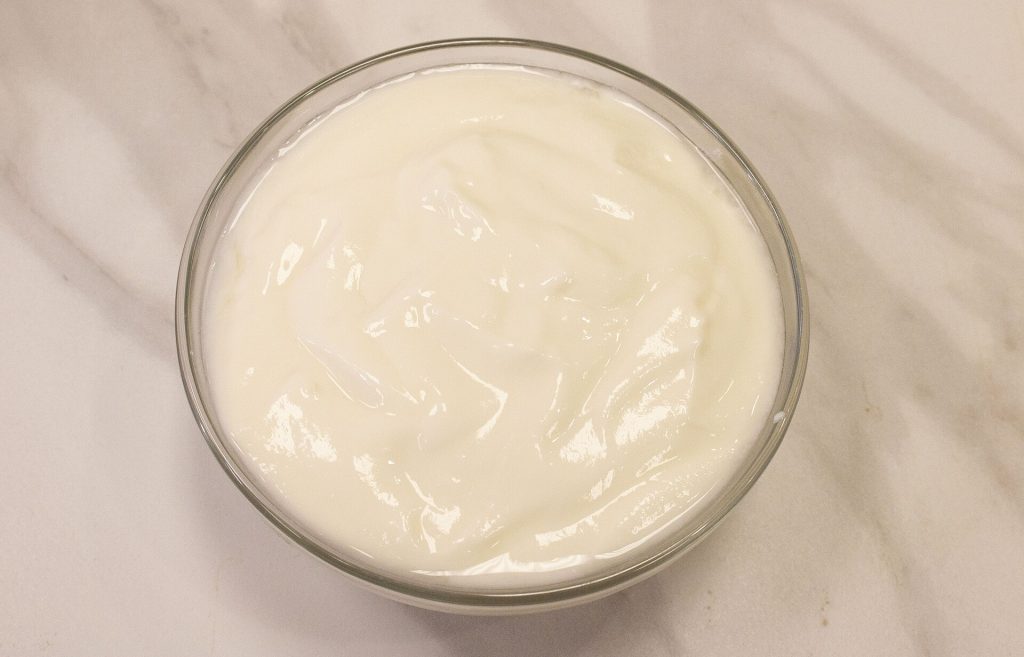
Plain yogurt is the closest match
Yogurt has the thickness, a similar mild acidity and enough body to stay where you put it. It is the one swap that needs no change to the rest of the recipe.
Use plain, unflavoured yogurt. Sweetened or flavoured tubs bring sugar and aromatics that scorch on a hot pan before the meat is done.
Thin it with two tablespoons of water per cup. Straight from the tub it sits in lumps rather than coating evenly.
Salt it at one teaspoon of fine salt per cup. That is roughly right for a pound and a half of chicken, and it scales in the same proportion.
Stir and taste the marinade before the meat goes in. It should taste seasoned, like a soup you would eat, not aggressively salty.
Four hours is enough for thighs cut from the bone. Overnight is better for a whole bird or a pork shoulder.
Past twelve hours the yogurt begins to draw water out of the meat and the surface turns tacky. A tacky surface sticks to the pan.
Full-fat yogurt works better than low-fat. The fat keeps the coating from drying into a crust that cracks off in the pan.
Greek yogurt needs three or four tablespoons of water per cup, because it is strained and much thicker to begin with.
Whatever you use, wipe most of it off before searing. A thick coat steams, and steaming is what makes skin pale and soft.
Milk and lemon, and the correction it needs
A cup of milk with a tablespoon of lemon juice, left ten minutes, thickens slightly and curdles. The curds are not a fault.
They are the point. The curds give the salt something to cling to, and they cling to the meat in turn.
This version is thinner than real buttermilk. Add a tablespoon of mustard or a tablespoon of yogurt to bring the body back.
If you leave it thin, turn the meat once at the halfway point so both sides spend time in the liquid.
Use it within a day. Milk sours further as it stands, and a marinade that was mild at breakfast can be sharp by the next evening.
Do not use skim milk. The fat is part of what keeps the surface from drying, and skim milk leaves chicken looking dull and grey.
When there is no dairy in the house
Two things still have to happen. Salt has to reach the meat, and the surface has to stay wet long enough for that to occur.
Start with dry salt, one teaspoon of fine salt per pound, rubbed on and left thirty minutes. The surface draws moisture, the salt dissolves in it, and it goes back in.
Then coat with a thin layer of mustard, or a mix of mustard and oil, before cooking. Mustard is acidic but weak.
It is thick enough to hold, and it browns rather than burns at normal pan heat. A tablespoon covers a pound and a half.
Mayonnaise does the same job with more fat. Use a thin smear rather than a coating, and scrape most of it off or it will spit.
Tomato paste loosened with oil is another carrier. It holds salt, adds colour and browns quickly, so keep the pan at medium.
In every case the salt is doing the seasoning. The coating only decides where the salt sits and how the surface browns.
What the marinade cannot do
No marinade reaches the centre of a thick piece of meat. Salt moves a few millimetres an hour at fridge temperature.
A two-inch chop comes out seasoned on the outside and plain in the middle. That is not a failure of the recipe.
It is the reason a marinade is paired with a sauce, and the reason thin cuts take to it better than thick ones.
If the cut is thick, score the surface lightly with a knife before it goes in, or cut it thinner first.
Both give the salt more surface to enter through, and both shorten the time needed.
Sugar is a separate matter. It browns early and burns early, so keep it under a teaspoon per cup if the pan will be hot.
A marinade with honey or jam in it needs a lower flame and more turning, or the outside will be black before the inside is cooked.
Building the container and the timing
Put the salt in first, then the yogurt or milk, then the meat. Salt stirred into a thick base distributes evenly.
Salt sprinkled over the meat on top of the base does not, and you get salty patches and bland patches in the same piece.
Use a bowl or a flat container rather than a tied bag. A bag stacks the meat on itself and leaves the liquid at one end.
A flat container keeps the pieces in one layer, which is what you want when the liquid is thin.
Cover it and keep it in the coldest part of the fridge, not in the door, where the temperature swings every time it opens.
Turn the pieces once at the halfway point if the liquid does not cover them.
Take the meat out twenty minutes before cooking and wipe off the thickest of the coating with your hand or a spoon.
Pat the surface dry with a cloth if it is very wet. A dry surface and a hot pan give browning in the first two minutes.
Then salt lightly again if the coating was thin, because some of the original salt leaves with the coating.
Measure a cup of plain yogurt into a bowl, add a teaspoon of fine salt and two tablespoons of water, and stir until it pours.
Taste it. If it does not taste seasoned enough to eat on its own, add another quarter teaspoon of salt and taste again.
Put a pound and a half of chicken thighs in, turn them once so every side is coated, then cover the bowl and put it in the fridge.
Set a timer for four hours. When it goes, wipe the excess off and cook the pieces the way you usually do.