Pasta and Grains
What pasta water starch actually does in a sauce

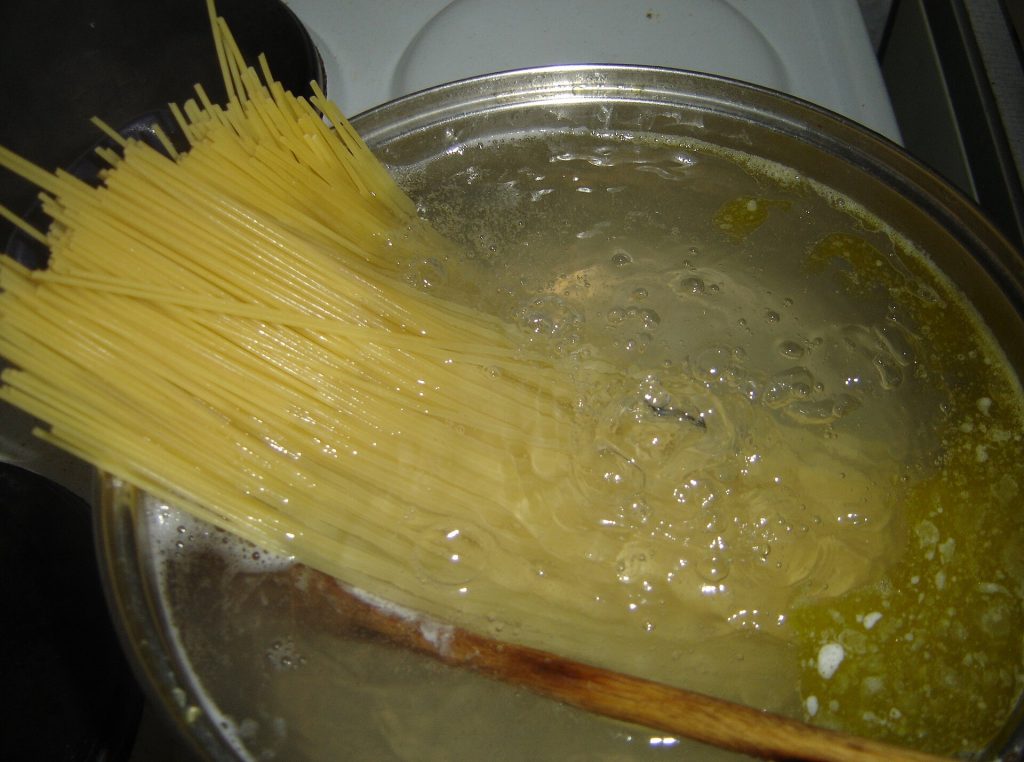
The advice to save a mug of pasta water has hardened into a claim that the water itself thickens a sauce. In the amount most cooks scoop out, it does not do that job.
A splash of cloudy water adds body and helps fat and liquid stay together, which is a smaller task than the one it is usually given. What the water carries is starch.
How much starch it carries depends on three things that rarely get mentioned: the volume of water in the pot, the weight of pasta that went into it, and how long the pasta cooked.
Change any one of those and the same splash behaves differently. A cup from a small pot of long-cooked pasta is not interchangeable with a cup from a large pot boiled for six minutes.
How much starch reaches the water
Dried pasta loses between five and eight percent of its weight to the water during a normal boil. Most of that is surface starch, and most of it leaves in the first three minutes.
A hundred grams of pasta in three liters of water puts roughly six grams of starch into the pot. That works out to about two grams per liter, thin enough to look like cloudy water and behave like it.
The same hundred grams in one and a half liters doubles the concentration. The water looks milkier, coats the pasta more heavily, and thickens a sauce far more readily.
This is why two cooks following the same recipe get different results. One fills a stock pot to the rim because the packet suggests it, and the other uses the smallest pot the pasta will fit into.
Neither is wrong. They are working with different ingredients and calling them by the same name, and the recipe never says which one it means.
The usable range is wide. Anything from one and a half to four liters per pound of pasta will cook the pasta, and the choice sets how much starch the sauce receives.
What the starch does inside a fat emulsion
A sauce that clings is an emulsion, fat broken into small droplets and held apart by something at the boundary. Egg yolk does that job in carbonara, and gelatinized starch does a weaker version of it.
Starch that has swelled in hot water and then cooled a little forms a film around each fat droplet. The film slows the droplets and keeps them from merging back into a slick on the surface.
The effect is real but modest. A spoonful of starchy water holds a butter sauce together long enough to plate it, and it will not turn a thin broth into a coating sauce.
Where it helps most is at the end. Sauce and pasta are tossed off the heat, the water goes in a spoon at a time, and the pan is shaken rather than stirred so the droplets are pushed apart.
Where it hurts is when too much goes in at once. Past a certain point the starch network sets as the pan cools, and the sauce stiffens into something that slides off the pasta in one mass.
That failure is not random. It usually means a small pot, a long boil, and a full cup of water added in a single pour.
Salting the water and the salt added twice
Salt in the water does not raise the boiling point in any way a cook can measure. It seasons the pasta from the outside, which is the only chance the pasta gets to be seasoned through.
Water at about one percent salt, ten grams per liter, is close to the salinity of a well-seasoned soup. The pasta takes up some of that water and comes out seasoned.
The problem arrives later. A sauce built on anchovy, cured pork or hard cheese is already salty, and a cup of salted pasta water pushes it further than most people intend.
Taste the sauce before any water goes in, then add the water in small amounts and taste after each one. The water is an ingredient with salt in it, not a neutral thinner.
Salt also changes the surface. Strongly salted water pulls water out of the pasta’s outer layer and leaves it firmer, which suits pasta that will finish in a hot pan.
None of this needs a measured brine. A handful in a large pot and a smaller handful in a small one gets close enough on a weeknight.
Reading the water instead of measuring it
Nobody wants to weigh starch at nine in the evening. The water shows what it holds if you look at it twice, once before the pasta goes in and once near the end.
Water still clear at eight minutes came from a large pot and will not thicken much. Water the color of weak milk came from a small pot and will.
A quick test is to dip a spoon in and let it run off. Water that leaves a faint film on the metal carries enough starch to matter, and water that runs off clean does not.
If the sauce is loose before the pasta goes in, that film is the cheapest way to pull it together. If the sauce is already thick, the same water dilutes it and a smaller amount is enough.
Cloudy water also carries the flour that clung to fresh pasta, which is a heavier load than boiled dry pasta leaves. Fresh pasta water thickens on its own and needs far less of it.
The look of the water is a better guide than the clock, because it reflects the whole pot rather than the recipe’s assumption about the pot.
Tongs are a better tool than a colander for a small batch. Lifting the pasta out wet keeps the starch in the pot, and it carries a little of that water into the pan on the pasta itself.
When in the cook to take the cup
Starch keeps leaving the pasta for as long as it is in the water, so the concentration is highest at the end. The last two minutes are when the pot is at its cloudiest.
Dip the cup about two minutes before the drain, not at the start. Water taken at the beginning is mostly salt and very little else.
Keep the cup off the heat once it is out. Water that stands and cools sets into a gel at the bottom and will not disperse evenly when it hits the pan.
If the pasta is going into a colander, dip before the pour. Once the pot is empty the water is gone and the sink is the only place left for it.
A wide shallow pan makes the next step easier. Tossing in a pan wide enough to hold the pasta in a loose pile gives the sauce room to coat, instead of trapping it in a heap.
Where the water should not go
The worst place for pasta water is over the pasta in the colander. That rinses off the surface starch the sauce is meant to grip and leaves the pasta wet enough to thin whatever goes on next.
Drain it dry, or leave it barely dripping, and put the water where it belongs, in the pan with the sauce.
If the pasta is going into a hot pan with oil rather than a wet sauce, skip the water entirely. Oil and water do not combine, and the water steams off and leaves the pasta slick.
Baked pasta is the exception worth knowing. There the water loosens a thick ragu so it can be spread between layers, and it goes into the sauce first, off the heat.
A dish finished with cheese and fat needs the water before the cheese goes in. Added afterwards, it dilutes the cheese and the sauce separates.
And a cold sauce, such as pesto loosened at the table, takes water better than heat. A spoonful stirred in, then a minute of resting, lets the starch do its quiet work.
Tonight, use the smallest pot the pasta fits in without crowding it, salt at about one percent, and dip a cup two minutes before the drain.
Add that water to the sauce off the heat, one spoon at a time, shaking between additions, and stop when the sauce coats the back of a spoon.