Vegetables
Sweet potatoes that cook through without a hard center

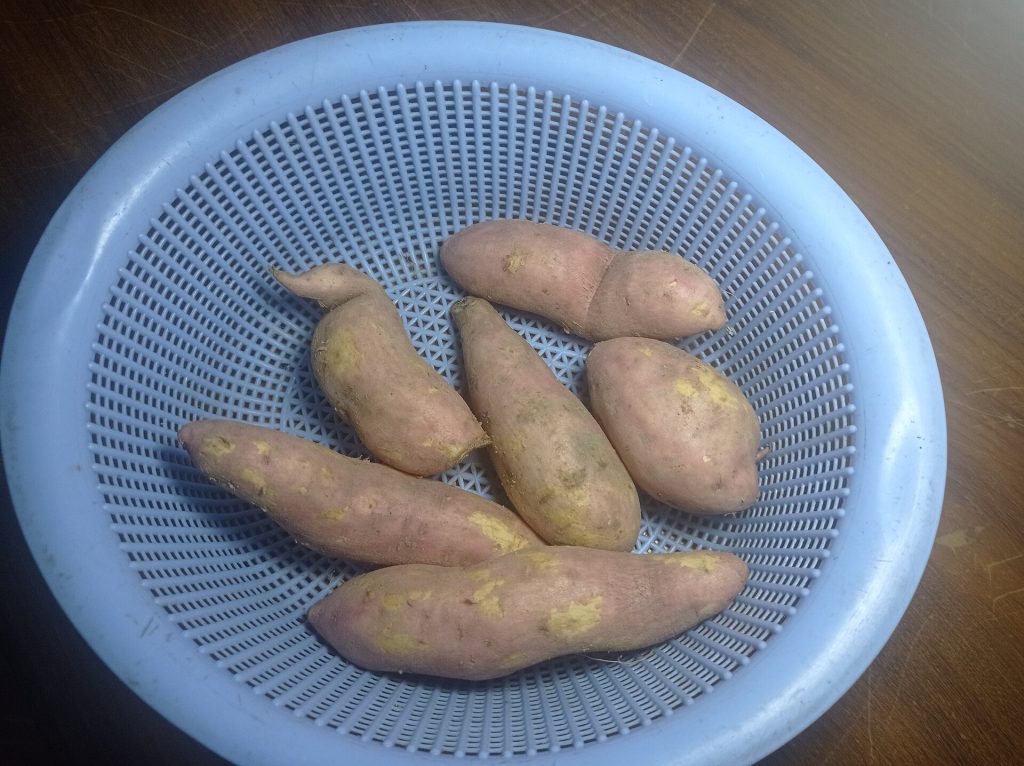
The usual advice is to bake sweet potatoes at 400F for an hour and test them with a knife. The knife test tells you the outside is done. The center can still be firm, because a sweet potato is not a uniform solid and does not heat like one.
Sweet potato flesh is dense, low in water and high in starch. Heat moves through it slowly, and the tapered ends are done long before the thick middle.
That is why one potato can be dry at the tips and hard at the center after the same hour in the same oven.
Size, shape, cut and the rate of heating decide the result, and all four can be controlled before the oven is on.
A sweet potato is not one temperature inside
Flesh conducts heat poorly. In a hot oven the surface climbs quickly while the center lags by tens of degrees for most of the bake.
The surface also loses water as it heats, which forms a skin and slows heat transfer further. The potato insulates itself as it cooks.
A tapered root makes this worse. The thin end is done in thirty minutes while the thick end is still firm at sixty.
This is why a knife slid in from the side can meet no resistance and still be an inch from the center. It traveled through cooked flesh on the outside.
Test at the thickest point, and test twice, once near each end. One reading is not enough to describe a shape that varies this much.
The same physics explains why cold spots survive in a microwave. The outside absorbs the energy and the inside waits.
Thickness matters more than weight. A long thin root and a short fat one can weigh the same and behave completely differently in the oven.
Size and shape decide more than the dial
Choose roots of similar size, eight to ten ounces each, and cook them together. A four-ounce one and a fourteen-ounce one cannot share a timer.
Long, even, cylindrical roots cook more evenly than short, bulbous ones. The thick middle of a fat root is the part that stays hard.
For whole baking, pick roots no thicker than about three inches across. Anything larger should be halved or cut into pieces.
Pierce the skin six to eight times with a fork, on all sides. Steam needs a way out, and a potato without holes splits along its length.
Do not wrap whole potatoes in foil for a crisp skin. Foil traps steam, softens the skin, and turns the bake into a steam cook.
If you want the skin soft, wrap after baking, not before. The flesh is already cooked and the trapped steam does no harm at that stage.
Trim the thin tail if it is very long, or fold it under. A thin tail will be carbonized before the middle is tender.
A potato cut into pieces loses water at the cut faces, so it browns faster and dries sooner. That is an advantage on a tray and a problem in a stew.
Slow bake against hot bake
A sweet potato contains an enzyme that converts starch to sugar, and it works best between about 135F and 170F. The longer the flesh spends in that range, the sweeter it becomes.
A slow bake at 350F passes through that range gradually and gives a softer, sweeter result. It takes sixty to seventy-five minutes for a whole root.
A hot bake at 425F moves through the range quickly and gives a firmer, less sweet interior with more caramelized edges. It takes forty-five to fifty-five minutes.
Starting in a cold oven extends the slow ramp without extending the total time much. The potato heats with the oven and spends longer in the enzyme’s range.
That is the technique behind the very sweet baked sweet potato, and it costs nothing except planning.
Neither method fixes a root that is too thick. A hot oven browns the outside of a fat potato while the center is still hard.
For a potato larger than three inches across, halve it lengthwise and bake cut side down. The distance from the surface to the center is halved, and the cooking time drops to thirty-five minutes.
The sugar also browns. A slow-baked potato carries more sugar at the surface, which is why it darkens sooner under a broiler than one baked fast.
If the skin is pierced and the potato sits directly on the rack, the flesh loses water through the holes and the interior comes out fluffier.
Halves, cubes and the tray
Halves at 425F, cut side down on a hot tray, take thirty to thirty-five minutes. The cut face caramelizes and the flesh cooks evenly from one flat side.
Score the cut face in a crosshatch, a half inch deep, before baking. The cuts let steam out and let the flesh settle without splitting.
Cubes need to be the same size, three quarters of an inch, or the small ones will be soft before the large ones are done.
Toss the cubes with oil, spread them on a tray with space between, and roast at 425F for twenty-five to thirty minutes, shaking twice.
A tray of cubes needs shaking, not stirring. Stirring breaks the corners off and the pieces release starch into the oil.
For wedges, cut through the long axis and leave the skin on. The skin holds the wedge together and gives the cut face something to push against.
A crowded tray steams the cubes and they come out pale and soft. Two trays are better than one full one, even if it means swapping shelves halfway.
Do not salt the cubes at the start. Salt draws water to the surface and slows the browning that makes roasted sweet potato worth the trouble.
For a mash, cut into one-inch chunks of equal size, start in cold salted water, and simmer for twelve to fifteen minutes. Starting cold cooks the center at the same rate as the outside.
Drain and leave the chunks in the colander for two minutes to steam dry before mashing. Water left on the surface makes a loose, wet mash.
The microwave start and the finish in the oven
A whole potato microwaved for four to six minutes, then baked at 425F for twenty minutes, comes out even inside with a dry, browned skin.
The microwave heats the water in the flesh quickly and evenly, which is the one thing it does well. The oven then dries the surface and browns it.
Pierce the skin before either step. A potato cooked in its skin without holes will split, sometimes violently.
Turn it once in the microwave and let it stand for two minutes before it goes into the oven. The standing time lets the heat spread from the outside in.
This route is the practical one on a weeknight, and it produces a better interior than an hour at 400F in a cold oven.
The skin will be less crisp than a fully oven-baked potato, but the flesh will be more evenly cooked, which is usually the point.
For several potatoes, microwave them together and add two minutes per extra potato, then finish them all on one tray.
Turn the potato once in the microwave and rest it for two minutes before it goes into the oven, so the heat evens out before the surface dries.
Ten minutes from now
Pick roots of the same size and no wider than three inches. If they are wider, cut them in half lengthwise.
Heat the oven to 425F, or 350F if you have the time and want the sweeter result.
Pierce each potato six to eight times, rub the skin with a little oil if you want it crisp, and put them directly on the oven rack with a tray underneath.
For halves, score the cut face and lay them cut side down on a preheated tray.
Start checking whole potatoes at forty-five minutes with a skewer at the thickest point. It should slide in with no resistance at all, not slight resistance.
When it does, take them out and leave them for ten minutes before cutting. The heat equalizes through the flesh, and the center finishes cooking without the outside drying further.
Do not refrigerate a baked sweet potato before it has cooled at room temperature for an hour. The trapped steam softens the skin on the way down.
Pick two roots of the same size, pierce them, and put them in a 425F oven now. Test the thickest point at forty-five minutes, then leave them on the counter for ten before you cut.