Pasta and Grains
Couscous and bulgur that are ready in ten minutes

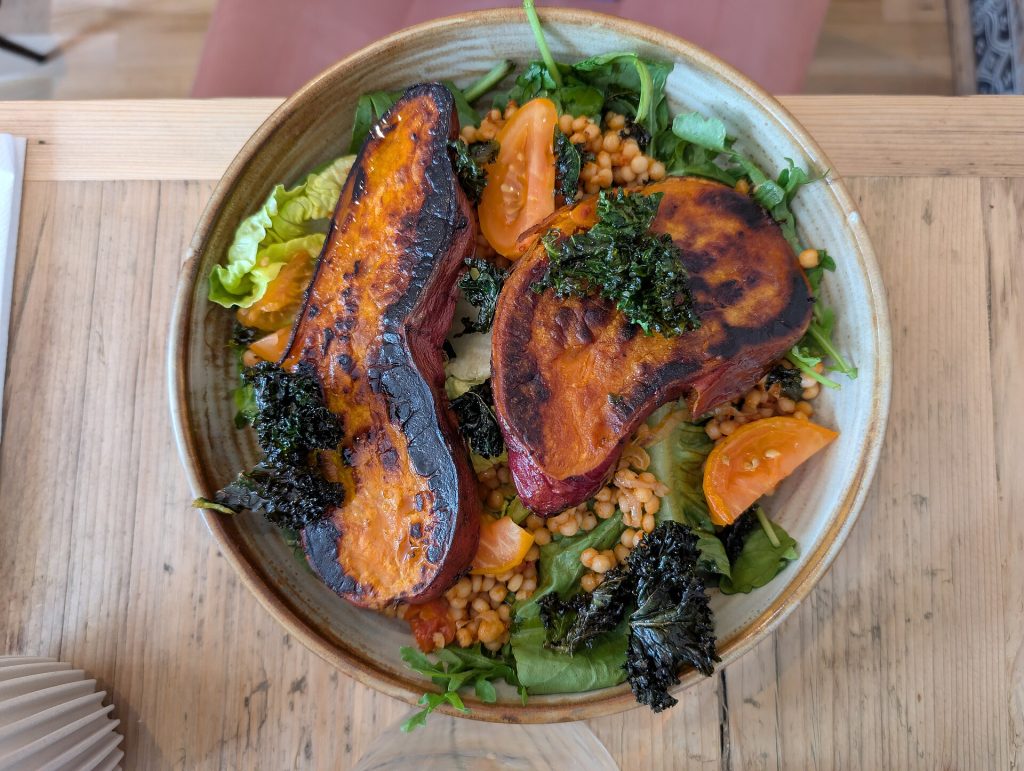
The packet instruction for couscous often describes steaming it over a pot for an hour, and for the box most people buy that instruction is simply wrong.
The couscous sold in boxes has already been steamed and dried at the factory. It needs hot water and five minutes of resting, and it gains nothing from a sieve and a pot of steam.
Bulgur is the same story with a different grain. The wheat is cooked, dried and cracked before it is bagged, so what you buy is par-cooked and only needs to hydrate.
Treat either one as a raw grain and boil it, and the surface ruptures, starch runs into the water, and the result is a paste with the texture of porridge.
The ten minutes that follow are mostly waiting. What decides the outcome is the ratio, the temperature of the water, and how much the grain is stirred.
What is actually in the bag
Couscous is semolina, moistened and rolled into small granules, steamed, then dried. The granules are porous and hold their shape until they are pushed too hard.
Bulgur is wheat that has been parboiled, dried and cracked into three or four grades. The parboiling sets the starch inside the grain so it will not go gluey.
Both are cooked in the sense that matters. Neither needs heat to be edible, and both need water hot enough to be taken up in a few minutes.
That is why the quick versions work at all. The water does the work, and the heat is only there to start it moving into the grain.
What neither product tolerates is a second cook. Boiling a hydrated granule bursts it and releases starch, which is the paste you may have met in a bad salad.
Grade matters more than brand. Fine bulgur for a salad takes five minutes, and coarse bulgur for a pilaf takes fifteen and wants a little heat under the pot.
Both are sold in ranges that look identical on the shelf and are not. A coarse couscous and a fine one take different amounts of water, and the label often does not say which is in the box.
Ratios and water temperature
The ratio decides whether the grain comes out separate or clumped, and the two products do not use the same one.
Couscous takes one part water to one part couscous by volume. Any more than that and the granules sit in a puddle at the bottom of the bowl.
Fine bulgur takes one and a half parts water to one part grain, medium takes one and three quarters, and coarse takes two parts.
The water should be just off the boil for couscous, so it hydrates the outside without collapsing it. Bulgur will take fully boiling water without damage.
Salt goes into the water rather than onto the grain afterwards. Half a teaspoon per cup seasons the grain through, and salt added later only sits on the surface.
Fat goes in after the water, never before. Fat on dry couscous coats the granules and blocks the water, which leaves a hard center that no amount of resting fixes.
Use a kettle rather than a pan where you can. Water poured at a rolling boil loses a little heat on the way, which is exactly the margin couscous wants.
Weighing is more reliable than measuring by volume when the grade is unknown. A cup of coarse bulgur and a cup of fine bulgur hold different amounts of wheat by weight.
The five minutes that do the work
Use a bowl wide enough to hold the grain in a layer a couple of inches deep. A narrow deep bowl hydrates the middle last and leaves a dry core.
Pour the water over, stir once with a fork to wet everything, and cover the bowl tightly with a plate or a lid.
Then leave it alone for five minutes, or five to fifteen for bulgur depending on the grade. Stirring during that time compresses the grains into a mass.
Uncover and fork from the edge towards the center, lifting rather than turning. The grains separate as the fork goes in, and steam escapes at the same time.
Leave it uncovered for two minutes after forking. That short drying is what keeps the grains from clumping together when they cool.
For a larger batch, add a minute to the rest rather than more water. The time scales more reliably than the ratio does, and it is easier to correct.
A glass bowl helps the first few times, because the grain can be watched hydrating through the side without lifting the lid and losing the steam.
Fixing a batch that went wrong
Clumps that will not break with a fork mean the water went in too fast or there was too much of it. Break them with your fingertips while the grain is warm.
If the clumps resist, sprinkle a tablespoon of water over the bowl, cover, and wait a minute before forking again. The steam softens the outside of the lump.
A crunchy center means the grain was under hydrated. Sprinkle a tablespoon of water per cup, cover, and give it three minutes, or sixty seconds in a microwave.
A wet batch is easier to rescue than a dry one. Spread it on a tray for three minutes, or put it in a dry pan over low heat and fork until the steam stops.
Too much salt cannot be removed. Use that batch as a base under something unsalted, such as plain yogurt or a stew that was deliberately under seasoned.
Do not add more hot water to a batch that looks dry on the surface. The water is usually still moving down through the grain, and the top always dries first.
A batch that tastes flat is short of salt or acid rather than short of water. A pinch of salt and a squeeze of lemon will do more than another splash from the kettle.
Wet grain that has already been dressed cannot be dried. Keep the dressing separate until serving, and the batch can be rescued at any point before that.
Building a meal in the same ten minutes
The resting time is enough to make what goes on top, and the order of operations is the only skill involved.
Put the pan on before the kettle. Butter browned with almonds takes four minutes, and it can be done while the grain sits covered on the counter.
Onion softened in oil with cumin and a pinch of cinnamon takes six, and it can go into the bowl at the forking stage, so the grain takes the flavor through.
Anything wet goes in at the last moment. Dressed cucumber, tomato and herbs release water, and grain that sits in that water for an hour turns soft.
Acid belongs at the end as well. Lemon juice added early slows hydration slightly and dulls the color of the grain as it sits.
Something crisp on top does more for the dish than another ingredient stirred through it, whether that is toasted bread, fried almonds or raw onion.
Yogurt on the side is not a garnish. It cools a spiced topping and adds a texture that the grain cannot supply on its own.
Keeping and reheating
Both grains keep three days in the fridge, and both dry out in a way that is easy to mistake for spoilage.
Reheat in a covered pan with a tablespoon of water over low heat for three minutes, or in a microwave with a damp sheet of paper over the bowl.
Cold couscous is better for a salad than warm couscous, because the grains firm as they cool and hold a dressing without going soft.
Freezing works, though the texture suffers. A thawed batch is fine in a soup or under a stew and poor as a salad.
Keep the two grains apart in the fridge if they are dressed differently. They absorb each other’s dressing within a day and end up tasting the same.
Portion before chilling rather than after. Cold grain compresses into a block, and breaking it up by hand crushes the granules at the edge.
Tonight, boil a cup of water, pour it over a cup of couscous with half a teaspoon of salt, cover the bowl, and set a timer for five minutes.