Pasta and Grains
Pan-fried gnocchi that hold together in the pan

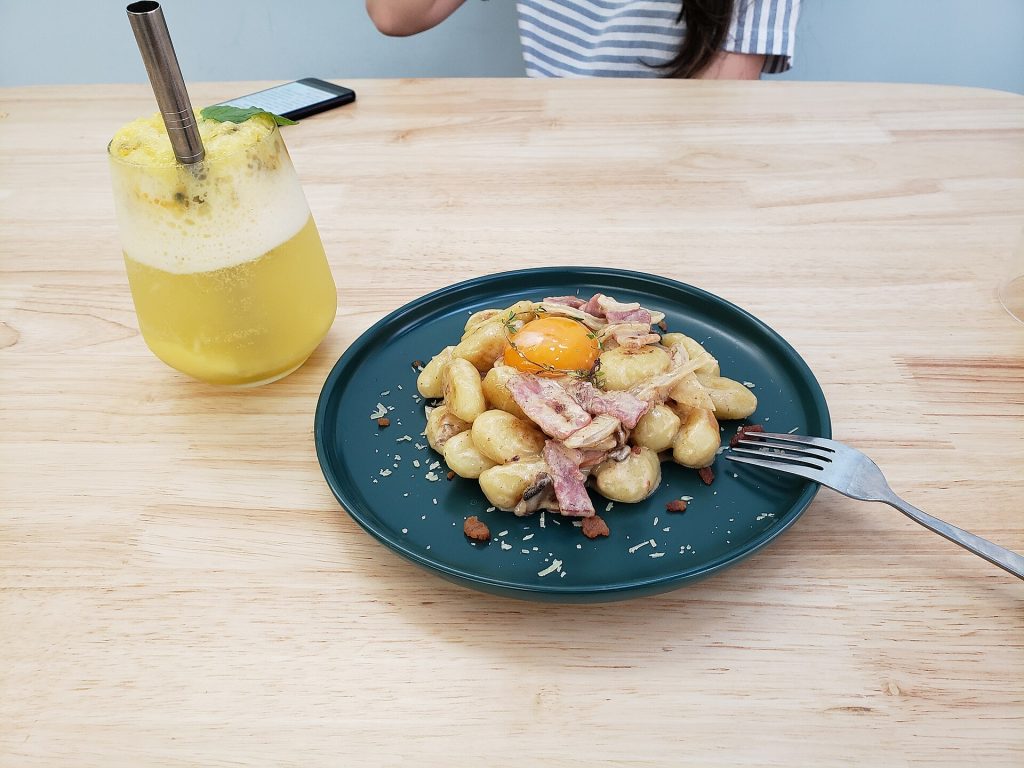
The packet instruction for packaged gnocchi usually says to boil them until they float, then drain and fry. That order is the reason they arrive at the table flat and stuck together.
Boiling fills the surface with water. The pan then has to drive that water off before any browning can start, and by the time it has, the starch inside has softened and the shape gives way.
Gnocchi brown best when they never see a pot of water at all. They are cooked in the sense that matters, and a hot pan with a thin film of fat does the rest.
What follows is about water, contact and patience, in that order, because each one decides whether the next can happen.
Why boiled gnocchi collapse in the pan
A gnocco is potato, flour and egg, and the starch in the potato has already been gelatinized by boiling the potatoes.
Dropping it into boiling water swells the surface with water and softens the outer layer. The center stays firm, so the piece ends up with a soft skin over a denser core.
In the pan that surface water turns to steam, and steam lifts the piece off the metal. Without contact there is no browning, and the piece sits in its own moisture.
Then the soft outer layer gives way under its own weight. The result is a flattened disc that sticks, tears when it is moved, and tastes only of the sauce.
Packaged shelf stable gnocchi are denser than fresh ones and hold up slightly better, but the same sequence flattens them within three minutes.
Gnocchi also release water as they heat. A piece that has already absorbed its fill has nowhere to put that water, so it weeps it into the pan.
The fix is not a hotter pan. It is keeping the water out of the surface in the first place.
The dry surface rule
Tip the gnocchi onto a tray in a single layer and pat them with a cloth. Then leave them uncovered for ten minutes.
That rest does two jobs. It lets the surface dry, and it takes the chill off if they came from the fridge, since cold gnocchi sweat in a hot pan.
Dust them lightly with flour and shake the tray so the excess falls through. A thick coat burns before the gnocco browns and tastes raw underneath.
A wire rack beats a tray when the pieces are soft. Air reaches the underside, and less of the surface is in contact with anything.
Frozen gnocchi should not be thawed in water. Spread them frozen on a tray and give them a few more minutes in a cooler pan.
Fresh homemade gnocchi are wetter and need longer on the tray, up to twenty minutes, and less flour than seems right.
If the surface still feels damp when the pan is hot, the pan is not ready for them. Wait another few minutes rather than adding flour.
Heat, fat and leaving them alone
Heat the pan first, then add the fat. A thin film is enough, and a pool of oil fries the outside while the middle stays dense.
Lay them in with space between, and do not touch them for two to three minutes. The first move is what tears the crust that has just formed.
Shake the pan rather than stirring with a spoon. Shaking moves the pieces and tells you when they have released from the metal.
A piece that slides when the pan is shaken is ready to turn. One that resists needs another thirty seconds.
Butter browns faster than oil and tells you the pan is hot by smell. It also burns sooner, so the window before the first turn is shorter.
Turn once, then give them another two minutes. That is the whole cook, roughly five minutes a side for a shelf stable gnocco.
The first piece is the test. Put one in the pan on its own and give it three minutes; if it slides cleanly, the rest can follow with confidence.
Do not cover the pan at any point. Trapped steam softens the crust within a minute and undoes the work.
Crowding and pan choice
A crowded pan drops its temperature and steams what is in it. Two batches in one pan is no faster than two separate batches and gives half the result.
A nonstick pan is the forgiving choice, since gnocchi release from it without enough fat to brown properly. The crust will be lighter as a consequence.
Cast iron or carbon steel gives a darker crust and needs a little more fat and closer attention. Stainless steel works once it is properly hot.
The pan should let the pieces sit in a single layer with a finger of space between them. A thirty centimetre pan holds about four hundred grams.
A wide pan that is barely hot is worse than a small pan that is hot, because nothing in it ever gets a surface to sit on.
If the pan is not wide enough, use two. Both on the stove at once is a better answer than a pile in one.
Two batches also give the pan time to come back to heat. A single crowded batch never recovers, and the second half steams in the first half’s water.
A splatter guard is useful at the end, when the sauce goes in and the pan is hot enough to spit.
When to add the sauce
Sauce in the pan with the gnocchi is where most of them soften. A wet sauce at a simmer pulls the crust off within a minute.
Make the sauce in the same pan first, pour it off, then fry the gnocchi in the fat that is left. The browned bits stay behind and season the crust.
Or fry the gnocchi, lift them out, build the sauce in the pan, and put them back for thirty seconds at the end with the heat off.
Brown butter with sage is the case for the first method. The butter browns in the pan, the sage crisps, and the gnocchi go in at the last moment.
A thick sauce, such as tomato reduced with olive oil, can go in earlier, but the pan should come off the heat before it does.
A spoonful of the starchy water from a gnocchi pot does not exist in this method, so use hot stock to loosen a sauce that tightens too far.
A sauce too thin to coat soaks into the crust instead of sitting on it, and the difference shows on the surface within a minute.
Cheese belongs on the plate rather than in the pan, where it melts into strings and takes the crust with it.
When they still break
A batch that breaks in the pan was usually too wet to begin with. Homemade dough that wanted more flour will fail here whatever the pan does.
Add flour a spoon at a time and stop as soon as the dough stops sticking to the counter. More flour makes the gnocchi tough rather than firm.
Potatoes boiled whole and dried in the oven give a drier dough than potatoes boiled in pieces and drained. Watery potatoes need less water, not more flour.
Old potatoes and new potatoes do not make the same dough. New potatoes hold more water, and a recipe written for storage potatoes will produce a slack mix with them.
If a batch has broken anyway, stop turning it and let it crisp. Broken pieces become a potato hash, which is a better dish than a plate of torn gnocchi.
Frozen gnocchi thrown into a hot pan break for the same reason boiled ones do. Start them in a cooler pan, covered for a minute, then uncover and raise the heat.
A batch that sticks and tears on the first turn needed more time, not more oil. The crust forms on the clock rather than on the amount of fat.
Tonight, tip a pack onto a tray, pat the surface dry, and leave it for ten minutes while a wide pan heats on the stove.
Add a thin film of olive oil, lay them in a single layer, and do not touch them for three minutes. Then shake, turn once, and take them out before the sauce goes in.