Prep and Storage
Marinade time limits and what happens past them

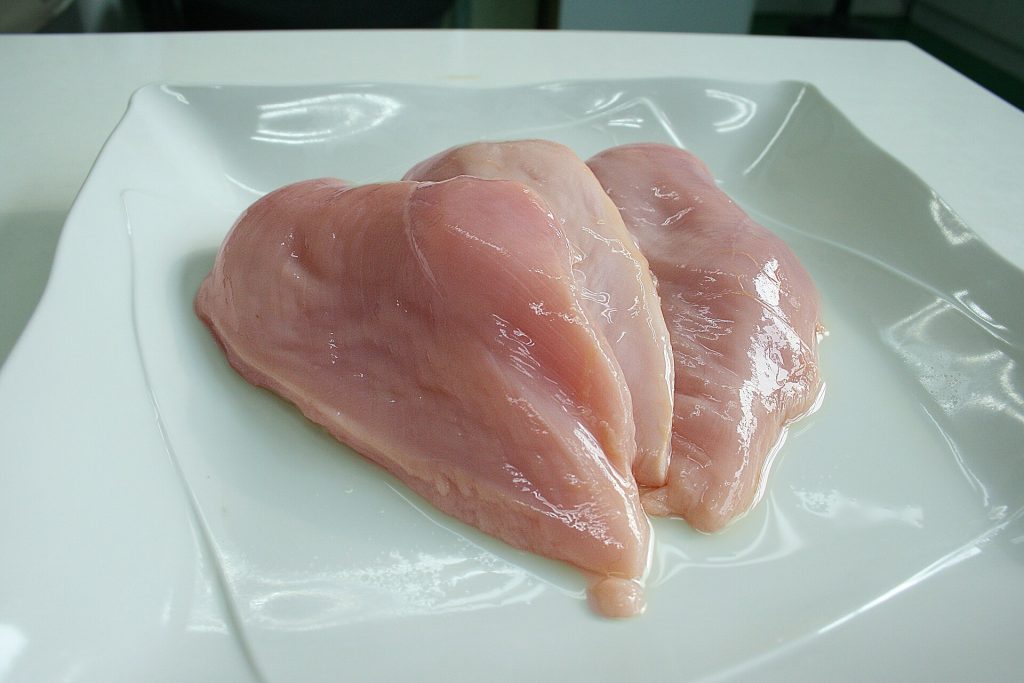
The idea that a marinade keeps working in your favor for as long as the meat sits in it does not hold. Past a point, the same liquid that tenderized the surface starts to ruin it.
Overnight is not automatically better than two hours. For fish it is much worse, and for a chicken breast it is usually pointless, because the flavor was never going to travel further than a few millimeters.
What a marinade does, how deep it does it, and how long that takes are three separate questions. Sorting them out turns a guess into a timer setting.
How far a marinade actually gets
A marinade is water, salt, acid, oil and aromatic compounds, and each of those behaves differently at the surface of a piece of meat. Only the small, soluble ones move inward at a useful rate.
Salt travels a few millimeters in an hour and roughly a centimeter over a day. Acid and water follow it slowly. Oil, herbs, garlic and spices stay on the surface almost entirely.
That is why a deeply colored marinade can leave the middle of a thick chop pale and plain. The flavor is in the outer two millimeters, and everything inside is unchanged meat.
This is not a reason to give up on marinades. It is a reason to stop expecting them to season the center, and to stop leaving food in them in the hope that they will.
The practical consequence is that a thinner cut marinates faster in effect, because more of its volume is within reach of the surface. A butterflied breast gains more from an hour than a thick whole one does from a night.
Scoring or pricking the meat does not carry flavor deeper in any useful way. It opens channels at the surface, but the liquid still has to diffuse inward, and the cuts lose juice during cooking.
Salt is the ingredient that matters most
Salt is the only component of a marinade that reliably penetrates and changes the meat itself. It dissolves into the surface water, moves inward along the moisture, and seasons as it goes.
Along the way it loosens the muscle fibers and helps them hold water, which is why a salted piece of pork or chicken comes out juicier than an unsalted one cooked the same way.
Salt also pulls water out at first, then releases it back as the concentrations equalize. That is why a salty marinade can leave a puddle in the bag in the first hour and a drier bag later.
For most cuts, forty minutes to four hours of salting is enough to season the outer centimeter. A full day gives a more even result and is worth it for a large roast or a whole bird.
If salt is the only thing you have time for, use it alone and skip the rest. A piece of chicken salted for thirty minutes and cooked well beats one that sat in a busy marinade for fifteen.
A whole chicken salted and left uncovered in the fridge overnight comes out with drier skin and more even seasoning. That is the one overnight case worth keeping.
Where acid goes past its limit
Acid works on the surface proteins, unwinding them and letting them hold water. A short exposure makes a firm texture softer and a bland surface brighter.
Longer exposure keeps going. The outer layer of protein breaks down too far and turns from firm into chalky, then into a soft, pulpy layer that no amount of heat repairs.
Fish shows this fastest. A fillet in lemon juice or vinegar is effectively curing at the surface, and twenty to thirty minutes is the useful window. An hour leaves the edges opaque and grainy.
Chicken and pork tolerate more, but a highly acidic marinade left overnight produces a surface that looks cooked before it reaches the pan and releases watery liquid as it sears.
Very acidic marinades also stop browning. The surface stays wet and its pH drops, and both of those slow the reaction that gives browned meat its color and flavor.
If a marinade tastes sharply sour on its own, treat the upper limit as half of what you planned. If it is mostly oil and salt, the timing is far more forgiving.
Yogurt and buttermilk sit lower on the acid scale and hold a piece of chicken for a day without turning the surface to pulp. That is why they show up in so many long marinades.
Sugar, honey and the pan
Sugar in a marinade does two useful things and one expensive one. It helps browning at the surface, it carries flavor, and it burns long before the meat is cooked through.
Honey, molasses, fruit juice and sweet soy all scorch at temperatures a steak or a chicken thigh reaches within minutes. The result is a black crust over meat that is still raw in the middle.
The way around it is to pat the surface dry before it goes into the pan. Most of the sugar sits in the liquid clinging to the outside, and removing that liquid removes most of the risk.
Moderate heat and a slightly longer cook also help, as does finishing thick pieces in the oven rather than in the pan. A grill needs more care than a pan because the heat comes from below and is harder to control.
A wet marinade also steams the surface. The water has to evaporate before browning can start, so a wet piece of meat sits in its own steam for the first minutes and never quite catches up.
Rinsing the marinade off is worse than wiping it. Water washes the salt out of the surface layer and leaves the meat wet, so pat it dry with a cloth instead.
Timings that hold for each kind of protein
Fish and shellfish sit at the short end. Twenty to thirty minutes in a marinade with acid, and no more than an hour in one without, is the working range for fillets, prawns and squid.
Chicken pieces take two to four hours. Whole birds can go longer, four to twelve hours, but the benefit past six is small and the risk to the surface texture is real.
Pork chops and tenderloin are comfortable at two to eight hours, and a pork shoulder or belly for a long cook can take a full day because it will be cooked to a much higher temperature anyway.
Beef steaks need an hour or two at most if they are to be eaten rare. A marinade left on a steak overnight firms the surface and dulls the beef flavor rather than improving it.
Tough cuts for braising are the exception. Twelve to twenty four hours of salty, acidic marinade does useful work on them, and the long cook that follows forgives the softened surface.
Add fresh papaya, pineapple or fig to a marinade and the clock shortens sharply. Those fruits carry enzymes that break protein down quickly, and two hours can be enough to turn a firm cut mealy.
What to do with the liquid afterwards
Marinade that has held raw meat is not a sauce. It needs a full boil for at least a minute before it can be tasted or served, and even then it is thin and salty.
Better is to keep a portion of the marinade back before the meat goes in, and use that clean portion to baste or to finish the plate. Two containers, one decision, no risk.
If you want a pan sauce, pour the used marinade into the hot pan after the meat comes out, let it bubble hard for a minute, then add stock or butter and reduce it until it coats a spoon.
Basting is where used marinade causes trouble. Brushed on near the end of cooking, it never gets hot enough to be safe and it deposits sugar exactly when the surface is hottest.
A dry rub avoids all of this. Salt, pepper and ground spice applied an hour ahead season the surface, brown cleanly and leave nothing to pour away.
Tonight, put the meat in the fridge with salt only, set a timer for forty minutes, and leave the rest of the marinade for the plate.
When the timer goes, pat the surface dry with a cloth, oil the meat rather than the pan, and cook it in a pan that is already hot.