Prep and Storage
Freezing in portions that reheat evenly instead of in one block

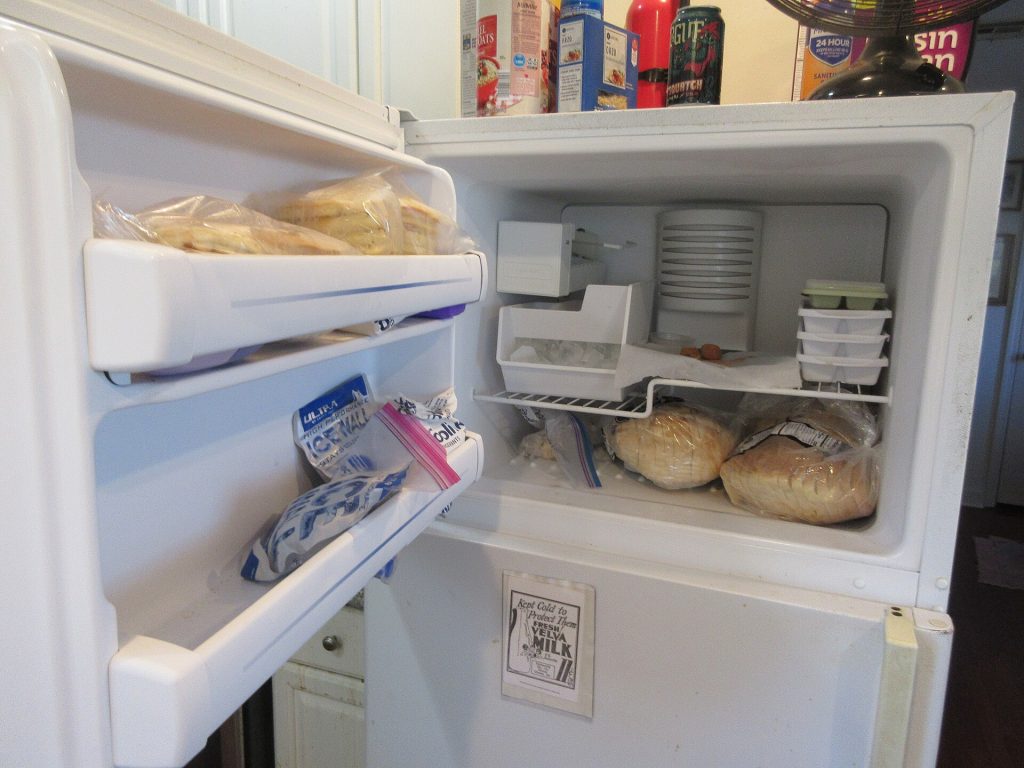
The habit of freezing a whole batch in one bag and hacking off a corner with a knife is the reason frozen food has a reputation for reheating badly. The freezing is rarely the problem. The shape of the portion is.
A single solid block presents one surface for heat to enter and a long distance for that heat to travel. Every method, from a microwave to a pan of simmering water, fights the same geometry.
Portion size and portion shape are the only two decisions that matter here, and both are made in the five minutes after the food comes off the heat. Get them right and the freezer stops being a place food goes to be forgotten.
Why a block thaws badly
Turning ice into water takes a large amount of energy for every gram, far more than raising the same gram by one degree. A frozen block therefore sits at around zero for a long stretch while heat pours in.
During that stretch the outside is already thawed and warming fast, while the center is still solid. The difference between the two ends of a five centimeter block can be sixty degrees.
A microwave makes this worse rather than better. Microwaves penetrate roughly one to two centimeters into food, so the outer shell absorbs most of the energy and the middle is heated mainly by conduction from that shell.
The result is a familiar one. The edges of the portion are boiling, the middle is still icy, and by the time the middle is hot the edges have lost all their texture.
A thin portion removes the problem instead of managing it, because no part of the food is far from a surface. Two centimeters is close to the limit for even results.
Choosing a portion that matches the pan
Start from the pan or the bowl rather than from the batch. A portion is the amount that will be reheated at once, which is usually one or two servings and rarely more.
For a stew, a sauce or a braise, a portion is about two hundred and fifty to four hundred milliliters, which is one generous bowl. Freeze that in a bag pressed to a slab, not in a tall tub.
For meat, freeze in the shape it will be cooked or served. Cutlets and steaks lie flat and thaw in twenty minutes in cold water, while a single large roast takes a day and a half.
Ground meat benefits most from being pressed into a flat disc about two centimeters thick before it goes in. The disc thaws in half an hour and breaks up in a pan without the gray, half-frozen lumps a block produces.
Pieces that will be used one at a time, such as meatballs, dumplings or chicken thighs, should be frozen separately on a tray first. Once each is hard, they go into one bag and stay loose.
Liquids need headspace. Water expands by about nine percent as it freezes, so a container filled to the rim will crack or push its lid off, and a bag filled flat will bulge at the seams.
A portion also wants a flat face. A bag holding a slab of sauce stacks, thaws and slides into a pan, while a bag holding a ball of the same sauce does none of those things well.
Air, ice and the surface of the food
Air is the other half of the problem. A bag with a pocket of air above the food dries the surface, and that dry patch is what people call freezer burn.
Press the air out of a bag by rolling the food toward the opening before sealing. For a liquid, lower the sealed bag into a bowl of water so the pressure pushes the air out, then close it.
Freeze bags flat on a tray or a shelf, with nothing on top. A bag frozen flat stays flat, stacks like a book, and thaws in a fraction of the time a slumped bundle takes.
Rigid containers work for anything that would be crushed, but they cost space and they insulate. Leave two centimeters of headspace, and choose the widest, shallowest container that fits the portion.
An ice cube tray is a good mold for stock, pesto, wine and leftover coffee. A cube is about fifteen milliliters, which is a useful unit for a pan sauce and thaws in the time it takes to chop an onion.
Double bagging is worth it for anything strong smelling. Fat takes on the aroma of its neighbors in the freezer just as it does in the fridge, only more slowly.
What takes freezing well and what does not
Food with a lot of water and rigid cell walls comes out changed. Cucumber, lettuce, celery and radish collapse into limp tissue because the ice crystals break the walls that held them crisp.
Cooked potatoes go grainy for the same reason, unless they are in a dish with enough fat and liquid to mask it. A plain boiled potato frozen and reheated is not worth the space it takes.
Cream sauces and custards split. The fat separates from the water as the sauce freezes and does not always come back together on reheating, so a cream sauce is better thickened after thawing.
Fried food loses its crust. The coating takes up water from the filling while frozen and goes soft, so fried cutlets and croquettes are best frozen raw or not at all.
Braises, stews, soups, stocks and tomato sauce freeze almost unchanged, and some improve. Cooked grains freeze well if they are spread flat while still warm.
Blanched vegetables, raw meat, bread and dumplings all hold up. The pattern is simple: high water plus a delicate structure fails, low water plus a sturdy structure survives.
Thawing, or not thawing
A portion two centimeters thick thaws in the fridge in about four hours and in cold water in about thirty minutes. A block of the same weight takes a day and a night.
The cold water route needs the food sealed and the water cold, changed every half hour. A bag left in a warm sink is a bag of food sitting in the range where spoilage is fastest.
The counter is not a thawing surface. The outside of a portion reaches room temperature while the middle is still hard, and the two ends spend hours at different temperatures.
Many things can go straight from frozen into the pan. A flat slab of stew or sauce loosens over low heat with a splash of water and a lid, and it is ready in fifteen minutes.
A frozen steak or chop can be cooked from frozen in a covered pan over medium heat, adding a few minutes a side. It browns less deeply, but it does not lose juice to a thaw it did not need.
Anything that was frozen raw and will be cooked through, such as mince or chicken thighs, can go in frozen provided the pan is not crowded and the heat stays moderate until the middle is done.
A portion frozen flat also thaws from one face inward, so the front gives way before the back does. Turn it over once, halfway through, and the two faces finish together.
Labels, order and the two month rule
Write the contents and the date on the bag with a marker before it goes in, on the flat side so it stays readable when stacked. A freezer full of unlabeled slabs is a freezer full of mystery.
Keep a list on the door, or a photo on a phone, and cross things off as they go. The list is the only reliable way to know that there are already three portions of chili in there.
Use the oldest first by putting new bags at the back of the shelf. A basket for cooked portions and a shelf for raw meat keeps the two from being confused.
Cooked food is at its best within two to three months, even at a steady minus eighteen. Home freezers cycle up and down as the door opens, and quality falls faster than the food spoils.
Tonight, before the pot goes cold, divide what is left into flat bags on a tray, press each to two centimeters, and write the contents and date on the outside.
Slide the tray onto a level shelf and leave it overnight. From tomorrow, a portion is something you can drop in a pan and eat in fifteen minutes.