Vegetables
How carrots change texture from raw to roasted

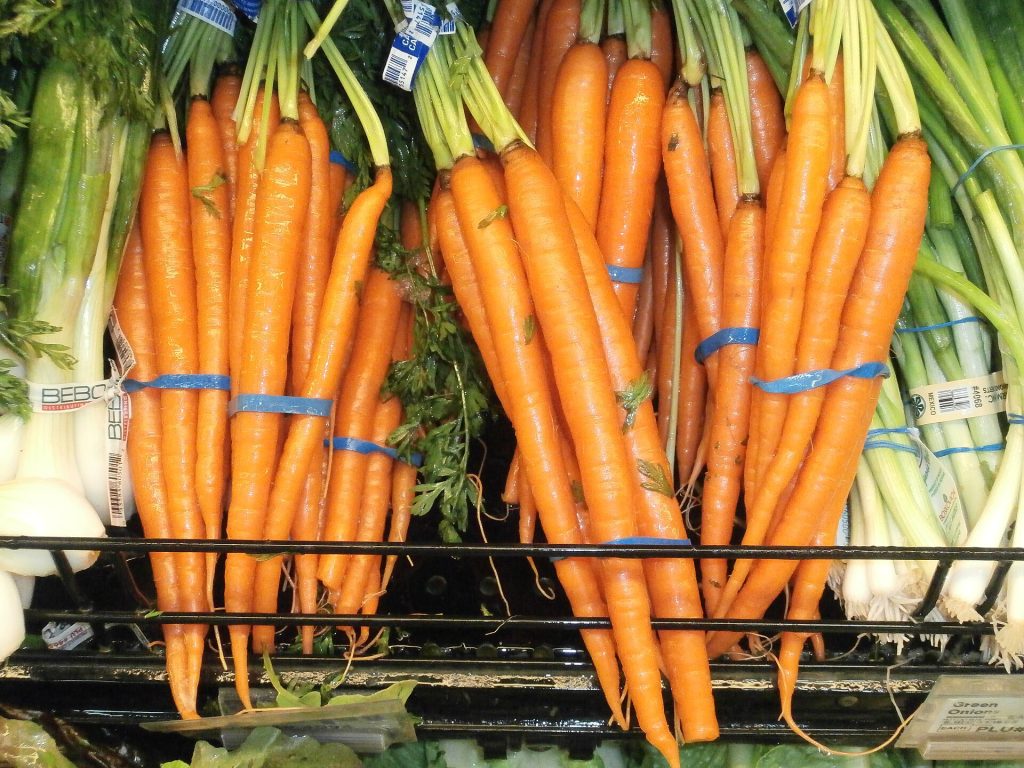
Most recipes treat carrot cooking as a single number, twenty minutes in a hot oven, and assume the result is what carrots do. Carrots do not have one texture. They have at least three, and each one is reached by a different route.
A raw carrot is crisp because of water pressure inside cells held together by pectin. Heat dissolves that pectin, and the amount of heat, the amount of water and the shape of the piece decide which texture you land on.
Raw, tender and collapsing are not degrees of the same thing. They are separate states, and the steps between them are short.
Knowing which state you want before you turn on the heat is most of the technique.
Three textures and the time each one takes
Raw carrot is crisp, opaque at the surface and slightly sweet. Nothing has been heated, so nothing has dissolved.
Blanched carrot, two to four minutes in boiling water, is crisp at the center with a softened outside. It still snaps but no longer tastes raw.
Tender carrot, ten to twelve minutes in simmering water, gives easily to a knife and holds its shape. This is the carrot in a soup that has not fallen apart.
Roasted carrot, twenty to thirty minutes at 425F, is soft inside with a browned, slightly chewy surface. The sugars have caramelized and the water has partly left.
Collapsing carrot, forty minutes or more in a covered pan with fat, is soft enough to crush against the roof of the mouth.
The times overlap because size moves them. A whole carrot and a quarter-inch coin are not on the same schedule at all.
Decide the texture first, then choose the cut that reaches it evenly. That order avoids most carrot failures.
The variety matters less than the season. Carrots harvested after cold weather hold more sugar, which is why a winter carrot browns faster than a summer one.
Raw: the crunch is water plus cell wall
A carrot straight from the fridge is crisp because its cells are full. Let it sit on the counter for a day and it bends instead of snapping.
Cut into batons and soaked in ice water for twenty minutes, it becomes crisper than it was, because the cells take up water through the cut ends.
That soak is the only trick in raw carrot prep, and it works on any carrot that has not dried out completely.
Cut batons to an even thickness, a quarter inch square, and they will feel consistent in the mouth. Uneven batons give a salad that is crunchy in some bites and soft in others.
A mandoline gives uniform coins but a soft edge. A knife gives a cleaner face and a crisper bite, at the cost of time.
Dress raw carrots at the last minute. Salt and acid draw water out within ten minutes and the crunch goes with it.
If the salad must wait, keep the dressing separate and toss just before serving. A drained carrot salad is a different dish from a fresh one.
Cut carrots for a salad just before serving if you can. A cut carrot loses water through the cut face and goes limp in the fridge within a few hours.
The middle ground: steam, blanch and glaze
Blanching is the fastest route to the texture between raw and soft. Salted boiling water, two to three minutes, then straight into cold water to stop it.
Steaming takes longer, six to eight minutes for chunks, but it does not wash away the sugars. Carrots steamed and then buttered taste sweeter than carrots boiled and buttered.
The glaze is the classic middle texture, and it is easy to get wrong. Butter, a little water, a pinch of sugar, and a lid for eight minutes.
Then the lid comes off and the water reduces until the butter and sugar coat the carrots. That last stage takes three minutes and cannot be rushed without burning the sugar.
A glaze that breaks is a glaze with too little fat and too much heat. Pull the pan off the burner and swirl in a knob of cold butter to bring it back.
The mistake is too much water at the start. Carrots release their own, and a pan with a cup of water in it will boil them rather than glaze them.
Start with two tablespoons of water for a pound of carrots and add more only if the pan goes dry before they are tender.
A quarter teaspoon of baking soda in the water speeds softening noticeably. It also turns the carrots soft quickly, so watch them after six minutes.
For a whole carrot cooked through without a hard core, start it in cold water and bring it up to a simmer. Twelve to fifteen minutes from cold gives an even result.
Roasting at 425F and why size decides
Roasting needs a dry surface. Wet carrots steam in their own moisture for the first ten minutes and never brown properly.
Dry them after washing, cut them into pieces of one thickness, and toss with oil until the surface shines but does not drip.
Halve long carrots lengthwise rather than cutting them into coins. The flat face sits on the tray, browns, and gives the piece a stable base.
Lay them cut side down on a preheated tray, one layer, with space between. Crowding produces steam and pale carrots.
Twenty to twenty-five minutes at 425F for halved carrots an inch thick. Whole thin carrots take the same time. Thick whole carrots take thirty-five to forty.
Turn them once at the halfway point, and only once. Every turn costs contact time with the hot metal.
Honey or maple added at the start will burn before the carrot is tender. Add it in the last five minutes, when the surface is already brown.
Salt at the start is fine here, because the surface dries fast enough that the drawn water does not stop browning.
Thin carrots roast faster than thick ones and dry out sooner. Check them at fifteen minutes and take the thin ones off the tray first.
If the carrots are crowded, the tray temperature drops and they steam. The browning that makes roasted carrots worth eating never happens.
The core, the peel and old carrots
The core of a large carrot is denser and cooks more slowly than the outer ring. That is why a thick carrot can be soft outside and hard in the middle.
Cutting lengthwise through the core solves it, because the core becomes a thin strip rather than a cylinder at the center.
Peeling is optional. A scrubbed carrot with the skin on browns better and holds a little more flavor, but the skin can be bitter on older roots.
A carrot that bends without breaking has lignified, and no amount of cooking will make it crisp. It is still good in a soup or a stock, where texture does not matter.
Carrots with the tops still on are younger and sweeter, but the tops pull water from the root. Cut them off before storing, or the carrots go soft in two days.
Store carrots in a bag in the coldest part of the fridge, and keep them away from the vent. Dry air is what turns them rubbery.
Small carrots sold as snacks are milled from larger roots, so they are all the same width and cook evenly. They are also drier at the surface and brown faster than they should.
A carrot cooked whole in its skin holds more of its own sugar than one cut into coins, because there is less surface for it to leach from.
Ten minutes from now
Decide the texture before you pick up a knife. Crisp for a salad, tender for a side, browned for a tray.
For the middle texture, put a wide pan on medium heat with a tablespoon of butter, two tablespoons of water and a pound of carrots cut into batons.
Cover for eight minutes, then uncover and let the water reduce until the butter coats the carrots, shaking the pan rather than stirring.
For the roasted version, heat the oven to 425F with a tray inside, halve the carrots lengthwise, oil them, and lay them cut side down for twenty minutes.
Either way, taste one at the end and check the center with a knife. If the knife meets resistance at the core, the carrot needed five more minutes, and now you know for next time.