Vegetables
Why mushrooms steam and how to get them brown

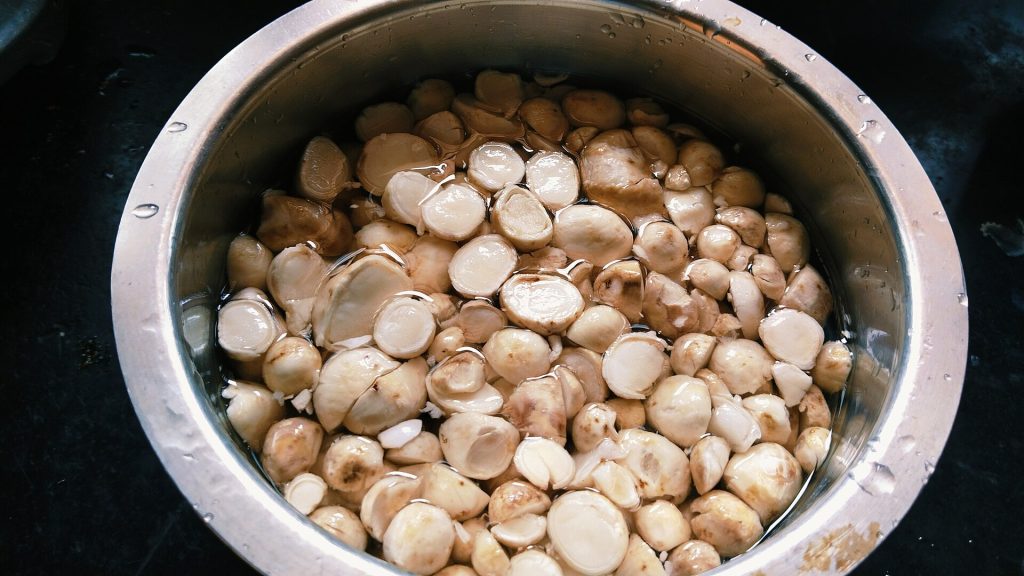
The usual explanation for pale mushrooms is that they hold too much water, so the advice is to salt them early and drive the water out. Salting early is exactly what keeps them pale. The water is already inside, and salt brings it to the surface at the moment browning should be starting.
Mushrooms are between eighty-five and ninety-two percent water. That water has to boil off before the surface can pass 212F, and browning begins above roughly 300F.
The real obstacle is not the water in the mushroom. It is the temperature of the pan once the water arrives, and how much of it there is to remove.
Control the pan and the batch, and mushrooms brown in the same time it takes to boil them.
Water inside, and salt makes it worse
A mushroom is a sponge of tightly packed filaments with water in and around them. Cut it and the water is already at the surface.
Heat the flesh and the cell walls soften at around 140F. The structure gives, and the water it was holding runs into the pan.
That water has to be boiled off entirely before the surface temperature can climb past 212F. Until then, the mushroom is being simmered in its own liquid.
Salt on the surface pulls more water out by osmosis within a minute or two. It adds to the puddle at exactly the wrong moment.
Salt after browning, or at the very end. The mushroom will take the salt on its surface and the crust will survive.
The one exception is a brine or a marinade, where the mushroom is salted before cooking by design. In that case dry it thoroughly and accept a softer result.
Rinsing is not the problem it is made out to be. A fast rinse adds a film of water, not a puddle, and most of it comes off in a towel.
The fibers in a mushroom run vertically through the cap and stem, which is why a mushroom cut in half holds its shape and one torn apart goes ragged.
Cut thick and keep one flat face
Thin slices release their water faster than a pan can drive it off. They end up steamed, curled and grey.
Halve small mushrooms and quarter the large ones. A half-inch thickness gives the water somewhere to go and leaves a face that can brown.
Keep the stem on. It is the same flesh, it holds the piece together, and it browns as well as the cap if it has contact with the pan.
Trim only the dry end of the stem. The rest is edible and adds structure to the piece.
Lay them cut side down and leave them. The flat face against the metal is where the crust forms, and it needs three or four minutes of stillness.
Whole small mushrooms will roll and brown unevenly. Halve them even if they are bite-sized, purely for the flat face.
Do not wash and cut hours ahead. Cut mushrooms release water and oxidize, and the surface goes slick before they reach the pan.
A knife is better than a brush here. Brushing compresses the surface and squeezes water out before the pan has a chance to drive it off.
The dry start, and the sound that tells you when
Heat a wide pan over medium-high heat with a teaspoon of oil, just enough to keep the skins from sticking, and add the mushrooms cut side down.
They will hiss loudly and steadily. That sound is water leaving, and it continues until the pan is nearly dry.
When the hiss turns into a crackle and the mushrooms start to squeak against the metal, the water is gone and browning has begun.
That is the moment to add the rest of the fat. Butter or olive oil added now coats the surface and browns rather than steaming.
Adding all the fat at the start is the common mistake. The fat cools the pan, the water emulsifies into it, and the mushrooms poach in a grey liquid.
If the pan goes dry and the mushrooms begin to catch before they are brown, add a splash of water, not oil, and keep going. The water steams off and takes the burnt bits with it.
Press them down with a spatula or a smaller pan for the first minute. Contact is what browns, and mushrooms are irregular enough to sit on their high points.
A cast iron pan needs longer to heat but holds its temperature better when the mushrooms go in. Thin steel recovers in seconds but drops further.
If the mushrooms came out of a marinade, pat them dry and give them a minute longer in the pan before the fat goes in.
Pan size, batch size and the collapse
A twelve-inch pan takes about eight ounces of mushrooms in one layer. Twice that will steam, no matter how hot the pan is.
Mushrooms shrink by half as they cook, so a full pan looks reasonable at the start and is still too full. Start with the pan less crowded than feels efficient.
Cook in two batches and combine them at the end. The second batch will brown faster because the pan is already hot and the first batch has left a film of fat behind.
A thin pan loses heat when the mushrooms go in and struggles to recover. A thick base holds enough stored heat to keep the surface above boiling.
Do not cover the pan at any point. A lid traps the water and turns the whole thing into a steamer in ninety seconds.
If the mushrooms are for a sauce, brown them first and remove them, then build the sauce in the same pan. The browned film on the pan is most of the flavor.
If they are for a side dish, finish them with butter, salt and a herb, off the heat, so the butter does not split.
Mushrooms that have been in the fridge for a week hold less water and brown faster. That is one of the few cases where older is easier.
Do not stack them while they cook. A pile traps steam between the pieces and the ones in the middle never see the pan.
A splash of stock at the end will lift the browned film and make a pan sauce in under a minute. Add it off the heat so it does not boil away.
The oven route and the tray
Roasting mushrooms works if the tray is hot and the pieces are spread out. It fails if they are piled or covered.
Heat the tray at 450F for ten minutes. Toss the mushrooms with a tablespoon of oil and lay them cut side down on the hot metal.
Fifteen to eighteen minutes, no stirring for the first ten. Then shake once and give them five more minutes.
Parchment is better than foil here. Foil traps steam against the surface and the mushrooms come out wet on the bottom.
Do not add salt before they go in. Salt on a tray of mushrooms draws water that then sits in the tray with nowhere to go.
A rack over a tray is the best setup if you have one. The water drips away and the air reaches all sides.
Oven-roasted mushrooms brown less than pan-seared ones, but they hold their shape and they can be done in bulk for a larger dish.
Oyster and shiitake mushrooms hold less water than buttons and brown in about half the time. Watch them rather than timing them.
If the dish needs mushrooms for a sauce, brown twice as many as you think. They shrink by half and the pan will look empty.
Ten minutes from now
Cut eight ounces of mushrooms in half through the stem, and wipe the pan rather than washing it.
Put a wide pan on medium-high heat with a teaspoon of oil, and lay the mushrooms cut side down in one layer.
Leave them for four minutes, listening for the hiss to become a crackle. Do not stir, do not salt, do not cover.
When the faces are brown, add a tablespoon of butter, turn them once, and cook for two more minutes.
Salt at the end, add a squeeze of lemon or a spoonful of stock, and scrape the brown film into the sauce.
Then take them off the heat while they still look slightly underdone, because they keep cooking in the pan for another minute.