Vegetables
Wilted spinach, and where its water should go

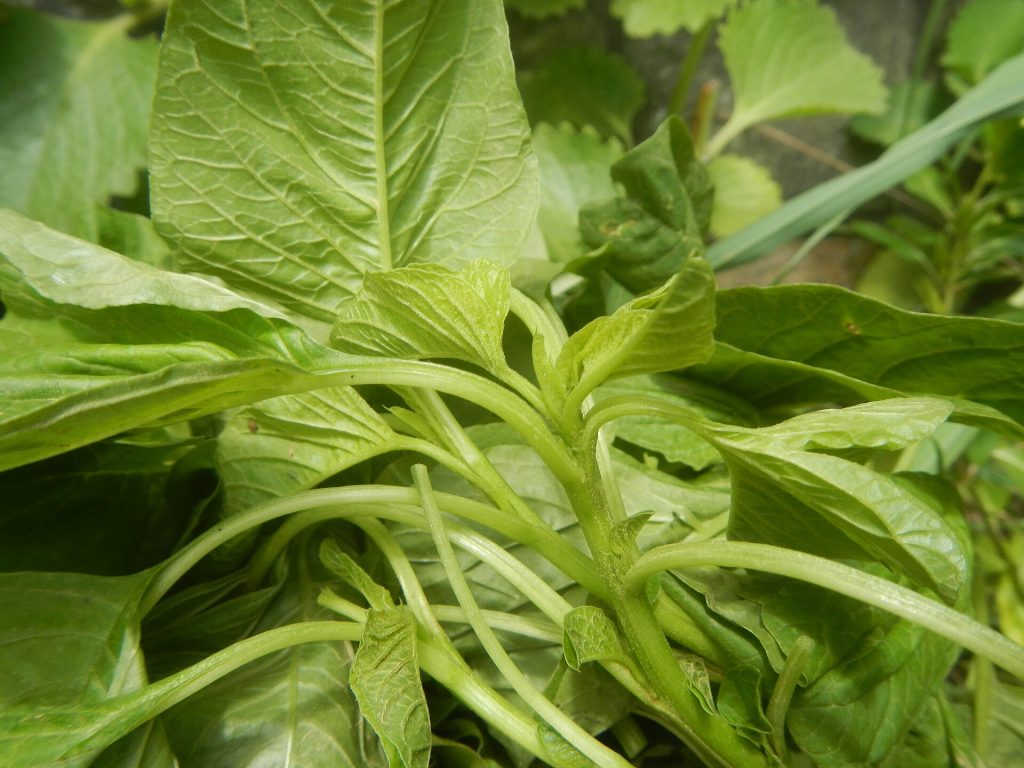
The usual instruction is to wash the spinach, shake off the excess, and put it into a hot pan with a splash of water to get it started. That splash is the problem. Spinach already carries enough water to cook itself twice over.
A pound of leaves holds close to a cup of water, and most of it comes out within ninety seconds of meeting heat. The pan then holds spinach in a shallow bath, and the bath is what turns bright leaves dark and soft.
Wilting is a fast process with a narrow window. Past that window the leaves keep softening, and there is no way back.
The fix is a wider pan, higher heat, no lid, and a decision about what to do with the liquid rather than how to avoid it.
Why spinach releases so much water
Spinach leaves are thin, which means a large surface area for their weight. They are also mostly water, above ninety percent.
Heat breaks the cell walls at around 150F. The water inside escapes at once, and because the leaves are thin there is nothing to hold it.
Other greens behave differently. Kale has thicker, waxier leaves and releases less. Chard stems hold water and take longer. Spinach collapses in under a minute.
That speed is useful. It means spinach can be cooked in the time it takes to heat a pan, and it also means the margin for error is small.
Water in the pan is not a fault in itself. The fault is water that stays there, because the leaves keep cooking in it while the pan struggles to boil it off.
Once the water has gone, the leaves begin to fry rather than steam, and that is where flavor develops.
Older leaves hold less water and collapse faster than young ones. A bunch of mature spinach can be done in two minutes where baby leaves take four.
A wide pan, high heat and no lid
Use the widest pan you own, twelve inches if possible. Surface area is what removes water, and a deep pot has almost none.
Heat the pan dry first, then add a teaspoon of oil and swirl it. The oil is for flavor and for the finish, not for the wilting.
Do not fill the pan more than a third full of raw leaves. A pound of spinach needs a pan that looks far too large for it.
No lid at any point. A lid turns the pan into a steamer, and steamed spinach is the grey, wet result the whole method is trying to avoid.
Keep the heat high. Medium heat gives the water time to accumulate; high heat drives it off as fast as it appears.
If the pan cannot take high heat, cook in two batches. Two quick batches in a wide pan beat one slow batch in a crowded one.
Have the colander ready before the leaves go in. The thirty seconds it takes to find it is thirty seconds of overcooking.
A skillet with sloped sides is easier than a straight-sided pan, because the leaves can be turned without climbing the walls.
If the pan smokes before the leaves go in, take it off the heat for thirty seconds. Burnt oil on spinach is a flavor that does not wash out.
Adding in handfuls and the sixty-second collapse
Add the leaves in four or five handfuls, waiting for each to collapse before the next goes in. The pan stays hot and the water never piles up.
The first handful wilts in about forty seconds. It will look like far too little food, and it is, which is why the rest follows.
Toss with tongs rather than a spoon. Tongs lift and turn the leaves instead of pressing them into the water at the bottom.
As each handful goes in, move the wilted leaves to the sides of the pan and put the new ones in the middle, where the heat is.
The whole pound should be wilted in three to four minutes. If it takes longer, the pan was too small or the heat too low.
Stop as soon as the leaves are limp and still bright. They will continue to soften from their own heat for another minute off the stove.
If the pan is wet at the end, turn the heat up for thirty seconds and keep the leaves moving. The water will boil off and the leaves will stop cooking.
The stems take ten seconds longer than the leaves. If they are thick, strip them out and add them first, then the leaves.
Salt, fat and the order they go in
Salt at the end. Salt at the start draws water out of the leaves before they have even wilted, and the pan fills faster.
Fat added at the start coats the leaves and slows the collapse, which sounds helpful and is not. The leaves need to wilt fast and evenly.
A better order is to wilt in a nearly dry pan, then add butter or olive oil off the heat and toss. The fat coats without steaming.
Garlic and chili go in after the spinach, in the space at the edge of the pan, for thirty seconds. Added first, they burn while the leaves release water.
Acid at the very end, lemon or a few drops of vinegar. Acid dulls the green over time, so it goes on at the table rather than in the pan.
Nutmeg and black pepper suit spinach and survive the short cooking time better than soft herbs, which should go in off the heat.
Butter browns quickly in a hot pan. Add it after the pan comes off the heat, or use olive oil if the pan is still on the burner.
Dill and parsley go in last, off the heat, or they turn dark and limp in the residual warmth within a minute.
What to do with the liquid instead of pouring it away
The water that comes out of spinach is not waste. It carries the flavor of the leaves and a good deal of the salt that was in them.
If you are making a sauce, a soup or a pasta dish, add the wilted spinach with its liquid and let it reduce into the dish.
If the spinach is a side dish, tip the pan and spoon the liquid into a cup. A tablespoon of it, reduced with butter, makes a glaze that tastes of the vegetable.
For a filling, tip the wilted leaves into a colander and press with a spatula, then wrap them in a towel and twist. A pound yields about a cup, and the drier it is the better it holds together.
That squeezed liquid can go into a soup or a stock. It is bitter in quantity, so taste before adding more than a few spoonfuls.
Frozen spinach is already blanched and holds more water than fresh. Thaw it, squeeze it hard in a towel, and treat it as an ingredient rather than a vegetable.
Never store cooked spinach in its liquid. It will be dark and limp by morning, and no amount of reheating will bring the color back.
Spinach water is dark green and slightly bitter. Reduced by half with a spoonful of butter, it makes a sauce for the same plate.
Ten minutes from now
Put the widest pan you own on high heat, and put a colander in the sink.
Wash a pound of spinach in a bowl, lift it out rather than pouring, and shake it once. A little water on the leaves is fine, a lot is not.
Add a handful to the hot pan with a teaspoon of oil. When it collapses, push it to the side and add the next handful.
When the last leaf is limp, tip everything into the colander and press once with a spatula, then return it to the pan off the heat.
Add a tablespoon of butter, salt, and a squeeze of lemon, and toss until the butter coats the leaves.
Serve it in a warm bowl, and keep the liquid that collected in the cup for the sauce or the soup you make tomorrow.
If the leaves are for a tart or a pie, squeeze them in a towel until no more water comes out. Any water left behind will make the base soggy.
Put the widest pan you own on the heat now, wash a pound of leaves, and add the first handful before the metal starts to smoke.