Vegetables
Why roasted broccoli goes limp and how to keep it crisp

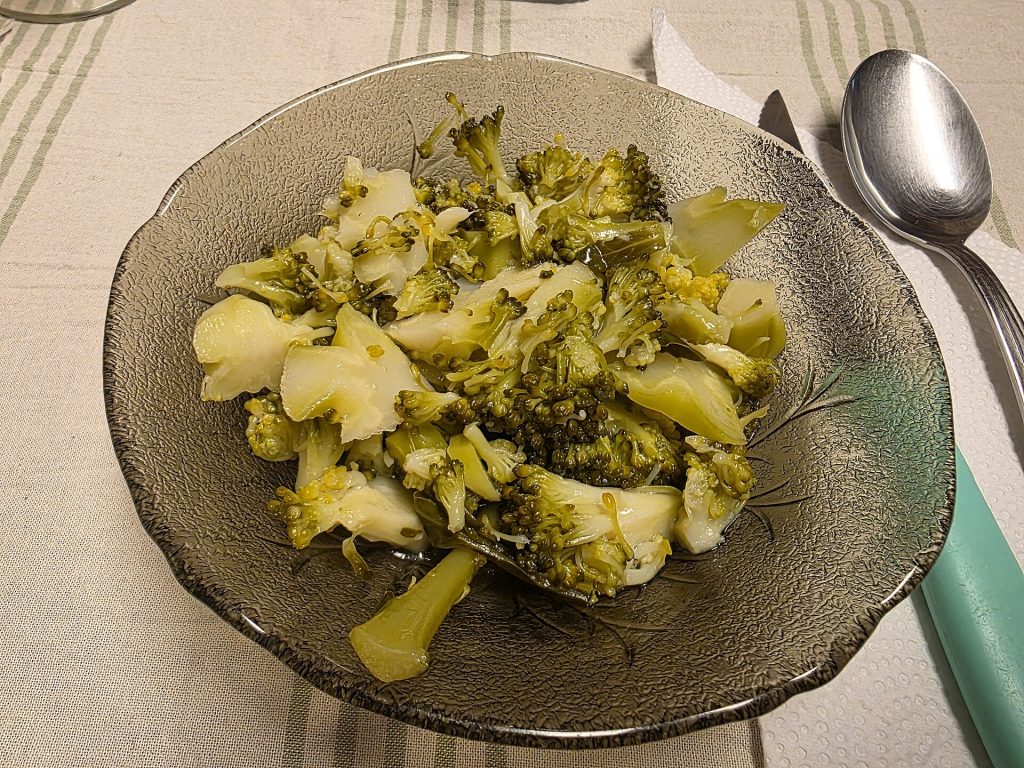
The standard instruction for roasted broccoli is to set the oven as high as it goes and leave the florets in for twenty minutes. Heat is not what separates crisp broccoli from limp broccoli. Water is, and a hot oven full of steam will produce a limp result as reliably as a cool one.
A head of broccoli is close to ninety percent water. That water has to leave the surface before the outside can brown, and until it does the florets are being steamed inside a tray-sized box.
The variables that decide the outcome are small. How the head is cut, how dry it is when it meets the metal, how much room each piece has, and how hot that metal is at the moment of contact.
None of them needs a new pan or a special setting. They need ten minutes of preparation that most recipes leave out.
Why a hotter oven does not fix a wet floret
Water on the surface of a floret holds it at 212F until the water has gone. Browning needs a surface above roughly 300F, so the two processes cannot run at the same time.
Raising the oven makes water leave faster, but only from the pieces exposed to moving air. In a crowded tray the water from one floret lands on its neighbor.
That is why two trays of identical broccoli at the same temperature can come out completely different. One had air moving between the pieces and the other did not.
A convection setting helps, because it strips the humid layer above the food and replaces it with drier air. Use it at 425F rather than 450F so the tips do not scorch before the stems soften.
The tray matters as much as the oven. A cold tray pulls heat out of the food at the exact moment contact matters most.
Put the empty tray in the oven for ten minutes before the broccoli goes on. The florets then land on metal that is already above the temperature at which surface water flashes off.
The difference shows in the first eight minutes. On a cold tray the contact face stays pale and soft while the tips dry out. On a hot tray the face starts to brown almost at once.
Cutting so the head and the stem finish together
A floret is two materials in one piece. The head is a dense cluster of buds with a great deal of surface area. The stem below it is solid and holds more water.
Left whole, the head burns before the stem is tender. Cut into thin coins, the head falls apart and the stem is still hard in the middle.
The solution is to make the pieces the same thickness rather than the same weight. Aim for a stem about three quarters of an inch across.
Cut down through the stem first, so every piece has one flat face to sit on. A flat face is the difference between browning and rolling around the tray.
Leave an inch or so of stem on each floret. The stem holds the head up off the metal, which keeps air moving under the piece, and it is the part that stays crisp longest.
The thick main stalk is worth keeping. Peel the outside, cut it into batons, and give it a five-minute head start on the tray. It cooks sweeter and denser than the florets.
Small side shoots can go in whole. They are thin enough to finish at the same rate as everything else.
Drying, which is mostly a matter of time
A towel removes the water you can see. The water that causes trouble sits in the seams between the buds, where a towel cannot reach.
Wash the head whole, shake it hard, and leave it on a cloth in front of a fan or a window for twenty minutes. Time does what patting cannot.
If the broccoli is going in the oven within the hour, wash it as soon as it comes into the kitchen and leave it draining in the colander.
A salad spinner gets most of the surface water, but spin the pieces after cutting, not before. The cut faces release water that was inside the stem.
Frozen broccoli is a different case. It has been blanched and frozen with water inside every cell, and it will release that water in the oven no matter how dry the surface is.
Thaw it fully, squeeze it in a towel, and roast it hotter and faster on a preheated tray, expecting a softer result. Do not put it in frozen.
Ice can form a puddle under a frozen floret within two minutes, and the floret then boils in it while the oven does nothing to help.
Fat, salt and the space between pieces
Oil does three jobs. It carries heat across the air gap between metal and food, it keeps the surface from drying to leather, and it browns.
Too little and the florets scorch in patches. Too much and they fry, which is not a failure but is a different dish and a greasier one.
A tablespoon and a half per pound is about right. Toss in a bowl until every piece has a thin sheen, with no oil pooling at the bottom.
Salting is the part most recipes get backwards. Salt on the surface draws water out by osmosis within minutes, and that water sits exactly where browning should happen.
Salt after the oil, right before the tray, and use a coarse salt that stays on the surface instead of dissolving into it.
Space is the other half of the method. One layer, with an inch between pieces, is the whole rule. Two pounds on one tray will steam.
If the tray is full, use two trays and swap their positions halfway through. Two half-full trays beat one crowded one in every measurable way.
Avoid foil if you can. It reflects heat and gives water a flat surface to pool on. Parchment is better, and bare metal is better still.
The last five minutes and the sound of the tray
Broccoli tells you where it is by sound. At first the tray hisses steadily as water leaves. Then it begins to crackle as the surface dries.
The crackle is the signal to look. The tips should be dark green with brown edges, and the thin end of the stem should give when pressed.
If the tips are browning while the stems stay hard, the oven is too hot or the pieces are too thick. Drop to 400F and give them five more minutes.
If everything is soft and pale, the tray was crowded or the oven was not hot enough. Spread the pieces out, raise the heat, and accept a softer result this time.
The move from crisp to soft takes only a few minutes, and it happens on the tray rather than in the bowl. Take it out while the centers are still slightly firm.
Residual heat finishes the stems. Five minutes on the tray out of the oven, uncovered, is part of the cooking and not a delay.
Never cover the tray to keep it warm. Trapped steam does in five minutes what the oven failed to do in twenty.
A squeeze of lemon or a splash of vinegar while the florets are hot will steam off and leave the acidity behind. Add it after the tray leaves the oven, not before.
What to do in the next ten minutes
Turn the oven to 450F, or 425F with the fan on, and put a bare metal tray inside.
While it heats, cut a head into pieces with stems about three quarters of an inch thick, each with one flat side.
Spread them on a cloth and leave them there until the oven is ready. Those ten minutes are the drying step, and they are doing real work.
Toss with a tablespoon and a half of oil per pound and a pinch of coarse salt, then lay them on the hot tray with space between them.
Roast for eighteen minutes, then look for brown edges and listen for the crackle. If the tray is still hissing steadily, give it four more minutes.
Eat them off the tray, or move them to a warm bowl without covering it. The crispness lasts about ten minutes and there is no way to store it.