Vegetables
Cooking cabbage without filling the flat with a sulfur smell

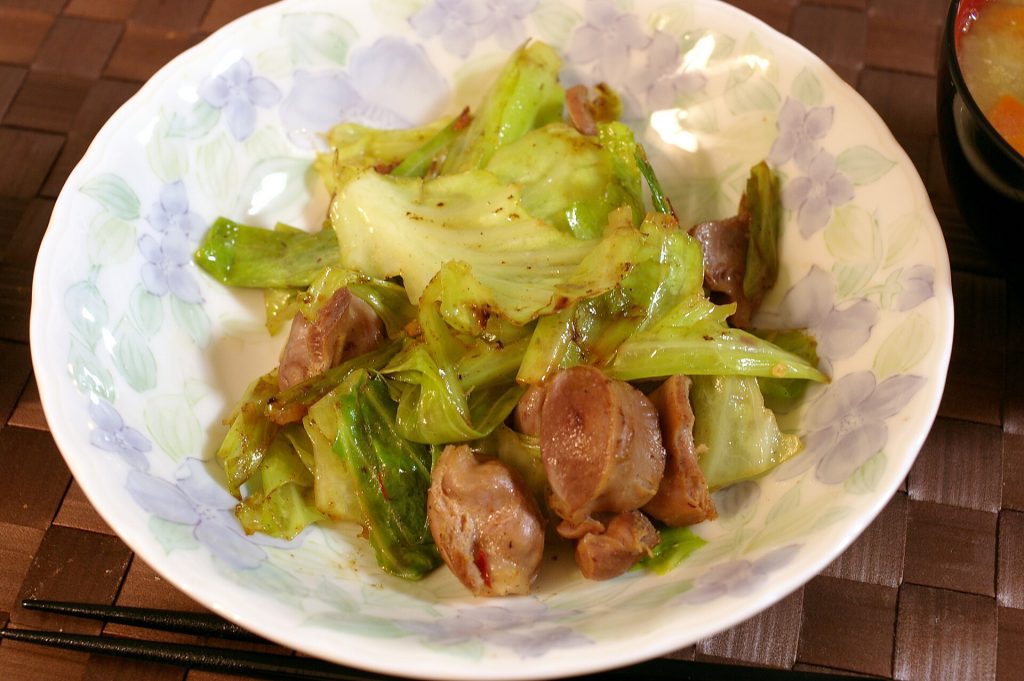
The advice for cooking cabbage is to open a window and get it over with quickly. Ventilation deals with the smell after it exists. The compounds behind it are made in the pan, in water, at a temperature most cabbage recipes sit at for ten minutes.
Cabbage holds sulfur compounds in the cells, stored apart from the enzyme that releases them. Cut the leaf and the two meet. Add heat and water and the result is a family of sharp, stale smells.
The enzyme is destroyed by heat within seconds, but the compounds already formed keep reacting, and long cooking in water produces more of the ones that smell like a school canteen.
A hot dry pan makes a different set of compounds entirely. The smell that reaches the room is toasted rather than boiled, and it clears in an hour instead of a day.
The reaction needs water, not just heat
A dry pan at 400F browns cabbage leaves before the sulfur chemistry has time to develop. The surface dehydrates, the sugars caramelize, and very little of the sharp material is released.
The same cabbage in a covered pan with a cup of water sits at 200F, below browning, and the sulfur compounds accumulate in the liquid and in the space under the lid.
That is why the worst smell comes from cabbage that was boiled, or steamed in a covered pot, or left to simmer in its own water after the lid went on.
Cutting matters for the same reason. Fine shreds rupture more cells, expose more of the substrate to the enzyme, and turn to pulp in the time it takes to heat through.
Cut wedges an inch thick, or shred to half an inch, and there is less damaged surface per bite and less material to react.
The temperature of the pan at the moment the cabbage lands decides which path it takes. A hot pan seals the cut face. A lukewarm pan lets the water come out first.
That is the whole physical argument for cooking cabbage the way you would cook a steak, and it takes less time than boiling it.
Cut wider than feels right, and keep the core
A wedge cut through the core holds its shape in a hot pan. The cut face browns, the layers inside steam gently, and the piece stays intact enough to turn with tongs.
Shredded cabbage has no such structure. It collapses into a soft mass within three minutes, and a soft mass releases its water all at once.
For slaw, fine shredding is correct because nothing is heated. For a hot dish, wider is better and faster.
Cut the wedges on a board with the core facing you, and use the core as a handle when you lay them in the pan. It also keeps the leaves from splaying out.
Red cabbage holds together better than white and takes a little longer. Savoy is more open, wilts fast, and needs higher heat for less time.
Trim only the woody disc at the base. The rest of the core is sweet and is what keeps the wedge from falling apart.
If you want a softer result, cut the wedge thinner rather than cooking it longer. Thin wedges soften in the same hot pan without the water bath that produces the smell.
Two heads will not fit in one pan properly. Cook them in sequence and keep the first batch warm in a low oven, uncovered.
Dry heat first, and water only at the end
Heat the pan until a drop of water dances, add a thin film of oil, and lay the wedges cut side down.
Leave them alone for four or five minutes. The face needs to brown and dehydrate before anything else happens, and moving it early guarantees a wet pan.
Do not add water at the start. Cabbage is about ninety percent water and will produce its own within two minutes of contact with heat.
If the pan looks dry and the cabbage is catching, add a spoonful of water at the edge of the pan, not over the top of the food, and only after the face has browned.
A splash of water at the end, with a lid on for sixty seconds, finishes the interior without stewing the outside.
That is the one place a lid earns its keep. At the end, briefly, with very little liquid, and off the heat when the minute is up.
Turn the wedges once, not four times. Every turn interrupts the browning and gives the released water a chance to cool the surface.
The pan should sound like frying, not like boiling. If it goes quiet and steams, the heat is too low or there is too much cabbage in the pan.
The lid is the problem, and so is too much fat
A lid traps the volatile compounds and, more importantly, holds the pan at boiling point. Nothing browns at 212F no matter how long it stays there.
If the cabbage needs to be tender all the way through, use a cartouche, a round of parchment laid on the surface. It keeps some steam in and lets the rest escape.
Fat carries sulfur compounds into the air and onto every surface in the room. A very oily pan spreads the smell further than a dry one.
Use enough fat to coat the pan, a tablespoon or two, and no more. The cabbage should look glossy, not swimming.
Fat added at the end, butter or olive oil off the heat, gives flavor without filling the kitchen during the cook.
The exception is bacon or sausage, where the fat is part of the dish and the smell is expected. Even then, a hot pan and a short cook reduce it.
Old oil in the pan is another source. Reused fat carries previous smells and smokes earlier, which adds its own contribution to the air.
Acid, salt, and the order they go in
A tablespoon of vinegar in the pan lowers the pH and slows the enzyme that starts the sulfur chain. It also keeps red cabbage red.
Without acid, red cabbage turns blue-grey, because its pigments respond to pH. A splash of vinegar or lemon brings the color back within seconds.
Salt draws water to the surface. Salting cabbage at the start leaves a puddle in the pan and a limp leaf.
Salt near the end, once the cut faces have browned and the structure has set. Coarse salt, sprinkled from a height, distributes more evenly than a spoon.
Sugar helps browning and balances the sharpness. Add it with the fat, early enough to caramelize, and keep the heat moderate so it does not burn.
Caraway, juniper and bay all sit well with cabbage and add aromatic cover without hiding the vegetable itself.
If the dish is a braise and the cabbage must cook for a long time, brown it first in a dry pan and add the liquid already hot. A short braise at a bare simmer smells far less than a long one at a rolling boil.
Clearing the air, and ten minutes from now
Turn the extractor on before the pan heats, not after the smell arrives. A hood that starts late has missed the first and strongest release.
Leave it running for ten minutes after the pan comes off the heat. The compounds linger in the air and on surfaces, and the fan is the only thing removing them.
A small pan of water with a splash of vinegar, simmered on a back burner, reduces what hangs in the room. It does not rescue cabbage that was boiled for twenty minutes.
Start now. Cut a head into wedges an inch thick through the core and put the widest pan you own on high heat.
When a drop of water dances on the metal, add a tablespoon of oil, lay the wedges cut side down, and do not touch them for five minutes.
Then turn them once, add a splash of vinegar, cover for one minute, and take them out while the core still has a little resistance. Run the hood for ten minutes after.