Weeknight Dinners
A twenty-minute stew from tinned beans and its own liquid

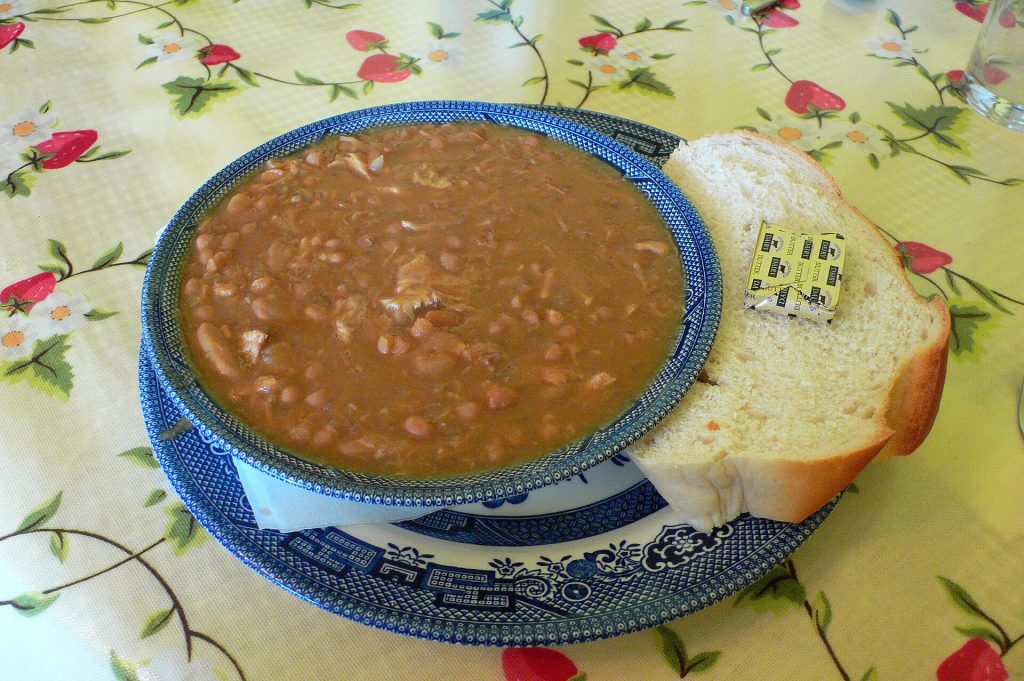
The word stew implies hours. That association comes from cuts of meat that need long heat to become tender, and it does not apply to a can of beans.
Beans are already cooked. They are tender, seasoned and packed in a liquid that holds most of what a long simmer would have extracted from them.
What a stew actually needs is body: a liquid thick enough to coat a spoon and to sit on a plate rather than run off it. A can of beans carries that body in the can.
So the twenty minute version is not a shortcut around a long recipe. It is a different route to the same texture, using material that has already done the work.
This serves three, using two cans of beans, one onion, garlic, a spoon of tomato paste and whatever greens are in the drawer.
What a long stew does that you cannot skip
A long simmer breaks down starch and connective tissue into the liquid. That is what gives a stew its weight and its gloss.
With beans, most of that breakdown has happened in the can. The starch is already in the liquid, and the skins have already softened.
What you lose by skipping the hours is depth from browning and reduction. Those you can put back quickly, with high heat and a wide pan.
What you cannot skip is the crushing step. Whole beans in a thin liquid make a soup with beans in it, not a stew.
You also cannot skip the fat. A stew with no fat in it tastes thin no matter how long it cooked, because the aromatic compounds in herbs and spices need fat to carry them.
And you cannot skip the final acid. A twenty minute stew tastes flat without it, and the flatness reads as undercooked even when nothing is undercooked.
The liquid in the can is the thickener
Most people drain and rinse beans out of habit. That habit throws away the part that makes the stew work.
The liquid in the can is water plus starch and some protein from the bean skins. It thickens when it is heated and reduced, in the same way a light stock thickens when it boils down.
Pour the beans into a bowl and keep the liquid. If the liquid looks thick and cloudy, that is good. If it looks clear and thin, the beans were packed in water rather than in their own cooking liquid, and you will need another thickener.
Rinse the beans only if the liquid tastes metallic or heavily salted. Taste a spoon of it before you decide. Most of the time it tastes of beans, which is what you want.
Add the liquid to the pan after the aromatics have softened, and let it come to a simmer before the beans go in. It needs a minute to loosen the browned bits.
If you have only clear packing water, add a spoon of tomato paste and let it fry in the oil for a minute. That gives body and color in place of the missing starch.
Something has to be crushed
Take a third of the beans out of the pan before you start, put them in a bowl, and crush them with the back of a spoon. Return them once the rest of the stew is simmering.
The crushed beans break open and release their starch into the liquid. That is what turns a broth into something that holds its shape on a plate.
You can also crush them against the side of the pan with the spoon as they cook. This is faster and it leaves a more uneven texture, which some people prefer.
Do not blend the whole pot. Blending breaks every skin and produces a puree with a grainy, pasty mouthfeel and no whole beans to bite into.
Keep at least half the beans whole. The contrast between whole and crushed is the texture of the dish.
If the stew is still thin after ten minutes, crush another handful and simmer for two more minutes. Do not add flour, which will taste of raw starch.
If it is too thick, add water a spoon at a time. Bean stews thicken further as they cool, so aim for slightly looser than the texture you want on the plate.
Crushing releases starch that coats the spoon and the roof of the mouth. That coating is what people mean when they call a stew rich.
Fat and aromatics carry flavor in twenty minutes
With no long simmer to build depth, everything has to happen in the first five minutes, and it happens in fat.
Warm three tablespoons of olive oil in a wide pan over medium heat. Wide matters: more surface means faster reduction and more browning.
Add a sliced onion and a pinch of salt, and cook until the edges are golden, about six minutes. Do not rush this with high heat, which browns the outside while the inside stays raw.
Add the garlic, chopped, for forty seconds. Add a spoon of tomato paste and fry it until it darkens, which takes another minute and removes the tinny taste.
Add the spices now, in the oil, and stir for twenty seconds. Ground cumin, smoked paprika, a pinch of chilli. Heat blooms them, and thirty seconds is enough.
If you have a parmesan rind or a piece of cured pork, this is the moment to add it. Either will give the stew a savory base that twenty minutes cannot build on its own.
Add the bean liquid and the beans, bring to a simmer, and cook for eight minutes. That is long enough for the flavors to meet and short enough to keep the beans intact.
Stir in a handful of chopped greens in the last three minutes. Spinach collapses in one, kale needs four. Add them by the clock, not by the look.
Do not use butter for the base. It burns at the temperature the aromatics want, and olive oil will take the heat.
Acid and salt at the end
Taste the stew at eight minutes and it will probably taste flat. That is not a lack of salt. It is a lack of acid.
Add a teaspoon of vinegar, stir, and taste again. The difference is immediate and it is larger than the quantity suggests.
Red wine vinegar and sherry vinegar are the strongest choices. Lemon juice works but it fades faster, so add it at the table rather than in the pan.
Salt after the acid, not before. Salt suppresses tartness and acid lifts saltiness, so the order changes how much of each you need.
If the stew tastes salty already, add acid rather than water. Water dilutes everything. Acid rebalances.
A spoon of something fermented, chopped fine, adds depth without lengthening the cooking time. A few olives, a little miso, a spoon of capers.
Finish with a thick thread of olive oil poured over the top, off the heat. It sits on the surface, and every spoonful carries some of it.
Taste after the acid and then decide about salt. Most flat stews need acid, and most salty ones need nothing but water.
Making it read as dinner
A bowl of bean stew is a side dish until something else is on the plate. That something can be as small as a piece of toast rubbed with garlic.
Toast the bread hard, rub it with a cut clove of garlic while it is still hot, and lay it in the bowl before the stew goes over it. It softens at the edges and stays crisp in the middle.
A poached egg on top adds richness and turns the bowl into a full meal. Crack it into a well in the stew, cover, and give it four minutes.
A spoon of yogurt, thinned with a little water, goes on last and off the heat. It cuts the fat and makes the bowl look finished.
Something crunchy on top matters more than it sounds. Toasted breadcrumbs, fried shallots, chopped nuts, anything that gives a different texture to the spoonful.
Chopped herbs, if you have them, go on at the very end and not in the pan. Heat kills the aroma within a minute.
Fennel, celery or a diced carrot added with the onion will soften in the same eight minutes and give the stew another layer.
Open both cans into a bowl now and keep the liquid. Put a wide pan on medium heat with three tablespoons of oil, and slice the onion while it warms.