Weeknight Dinners
Sheet-pan salmon with broccoli that chars instead of steaming

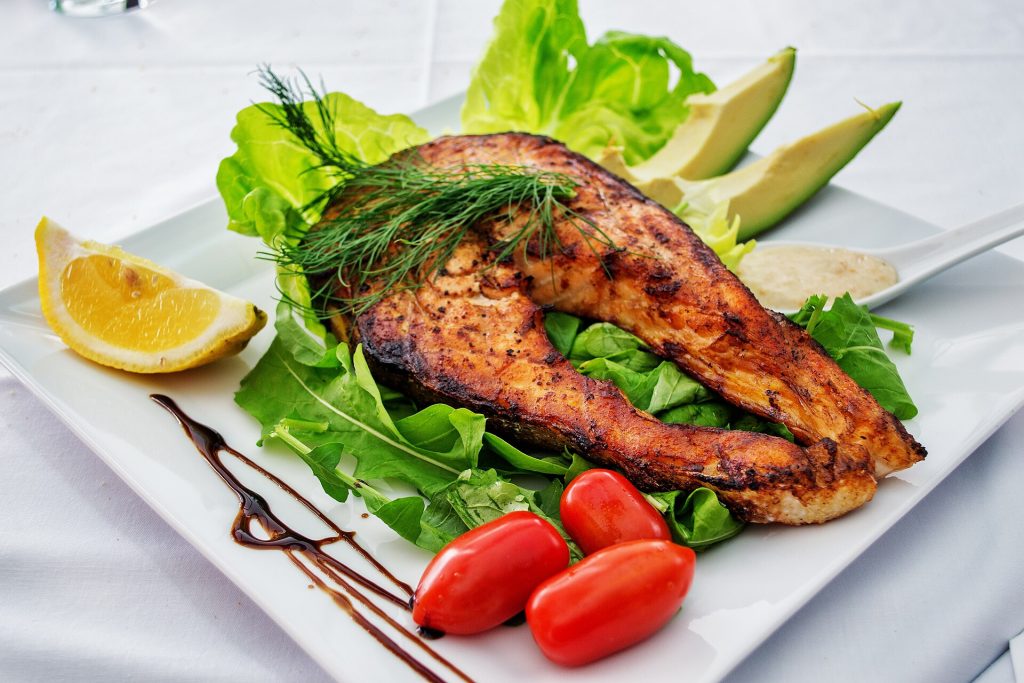
Salmon and broccoli on one tray is presented as a single operation with one timer. It is two operations that happen to share a tray, and they run at different speeds.
Broccoli needs a hot dry surface and enough time to brown at the edges. Salmon needs a shorter time and a gentler environment, or the outside sets before the centre is warm.
Put them in together at the same temperature and one of two things happens. Either the broccoli is raw at the stem, or the salmon is chalky and the florets are limp.
The correction is a head start and a temperature drop. Broccoli goes in first on a very hot tray. The fish joins it later, when the oven has been turned down.
This is a twenty five minute dinner for two, or double it on a second tray rather than crowding one.
Two foods, two rates
Broccoli is mostly water and air, held in a stiff cellulose structure. It needs temperatures well above boiling at the surface before the edges will brown.
Salmon is a soft protein network with fat running through it. It firms at around 120F and turns dry and chalky by 140F.
Those two targets do not live in the same oven at the same time. Broccoli wants 450F for twenty minutes. Salmon wants 400F for twelve.
You can meet both by sequencing. The broccoli takes the high heat alone, the fish arrives when the temperature drops, and the residual heat in the tray finishes the florets.
The tray itself is part of the equipment. A thin tray flexes and cools when cold fish lands on it. A heavy tray holds its temperature and keeps the broccoli going.
Preheat the tray, empty, in the oven. It takes five minutes and it is the difference between broccoli that sears on contact and broccoli that slowly warms.
Thickness decides the timing here, not weight. A thin fillet and a thick one on the same tray need different times, and no single timer covers both.
Dry the broccoli and give it a head start
Wash the broccoli and then dry it properly, in a towel, in batches. Water on the surface has to boil off before any browning can begin, and that takes minutes you do not have.
Cut the florets into pieces of similar size, roughly an inch across the head. Keep the stem attached and split thick stems lengthways so they cook at the same rate as the head.
Toss in a bowl with oil, salt and pepper until every piece is slick. Oil is the heat transfer medium between the tray and the vegetable, and a dry piece will scorch before it browns.
Spread them cut side down, with space between. Cut side down is the detail that matters: a flat face on hot metal browns, a rounded head only dries.
Roast at 450F for twelve minutes before the fish goes anywhere near the tray. The florets should be dark at the tips and the stems should have lost their raw snap.
If the pieces are large, give them fifteen. If they are small, ten. Size is the variable, not the clock.
Do not stir them at the halfway point. Every time you move a piece you break the contact it has built with the metal and restart the browning.
Cold fish on a hot tray
Take the salmon out of the fridge twenty minutes before it goes in, and pat the skin dry. A cold fillet drops the tray temperature and stretches the cooking time, which dries the outside.
Dry skin is the difference between skin that releases from the tray and skin that tears and sticks. Paper towel, pressed firmly, then a light rub of oil on the skin only.
Season the flesh, not the skin, and season it just before it goes in. Salt on the skin draws water out and undoes the drying.
Lay the fillets skin side down on the hot tray, in the gaps between the broccoli, not on top of it. On top means the fish steams and the broccoli is shielded from the heat.
Turn the oven down to 400F when the fish goes in, and close the door. The drop protects the fish while the tray holds enough heat to keep the broccoli going.
Twelve minutes is the working time for a fillet an inch thick. Thinner fillets need eight, thicker ones need fifteen.
Do not baste. Every time the door opens you lose about twenty five degrees of oven temperature, and the broccoli stops browning while the fish waits.
The thin tail and the thick end
A whole side of salmon is not one thickness. The tail end is thin and the head end is thick, and the difference can be an inch and a half.
If you cook a side whole, the tail is chalky by the time the thick end is done. Cut it into portions first so each piece has a similar thickness.
For portions cut from the thin end, fold the very tail under itself so the piece is even. It looks untidy and it cooks evenly, which is the better trade.
Arrange the thickest pieces near the back of the oven if it runs hot at the back, which most domestic ovens do. The thin pieces go to the front.
Rotate the tray once, at the point the fish goes in. That single rotation evens out the difference between the front and back of the oven.
Space is the difference between char and steam
A crowded tray produces steam no matter what the temperature says. The water leaving the vegetables has nowhere to go, so it sits in the layer of air around the food.
Leave a finger’s width between pieces. On a standard half sheet, that is about a pound and a half of broccoli, no more.
If you need more food, use two trays and put them on two racks, swapping positions halfway through. Stacking two trays on one rack blocks the heat from below.
Raise the tray in the oven if the broccoli is not coloring. The top third of the oven is hotter and the radiant heat from the element is stronger there.
Drop it lower if the florets are blackening before the stems are tender. You want even heat, not direct radiant heat, at that point.
Do not cover the tray at any stage. Foil traps the steam you have been trying to avoid since the drying step.
A tray that is too small is the most common cause of a limp result. The food climbs up the sides, the air cannot circulate, and the whole thing turns into a steamer.
Do not stack the broccoli to make it fit. Two trays with space between the pieces beat one crowded tray every time.
Testing the fish without cutting it
Press the thickest part of the fillet with a fingertip. It should feel firm at the edges and give slightly in the centre, like the base of your thumb when the hand is relaxed.
If it feels firm all the way through, it is past the point you want. Salmon continues to firm as it rests, so pull it early.
White protein will start to bead on the surface as the fish approaches done. A little is normal. A lot means it has gone too far and the texture will be dry.
A thermometer in the centre should read 125F for a moist texture. Take it out at 120F and let it carry over.
If you are unsure, break the flake at the very end of one portion rather than the middle. The end is always further along, so if the end is just done, the centre is close.
Let the tray stand for three minutes before serving. The fish finishes, the broccoli stops, and the juices settle back into the flesh.
Serve from the tray with the broccoli around the fish, and spoon any tray juices over the florets. They are salty and taste of the fish, which is the point of cooking the two together.
A fatty fillet will look underdone when it is ready. The fat keeps the centre glossy long after the protein has set.
If you are cooking two trays at once, test the upper one first. It runs hotter, and the gap between the trays can be five minutes.
Turn the oven to 450F and slide an empty tray inside while it heats. Dry the broccoli in the meantime, and the first stage can start in five minutes.