Weeknight Dinners
Pan-seared pork chops with a pan sauce that will not break

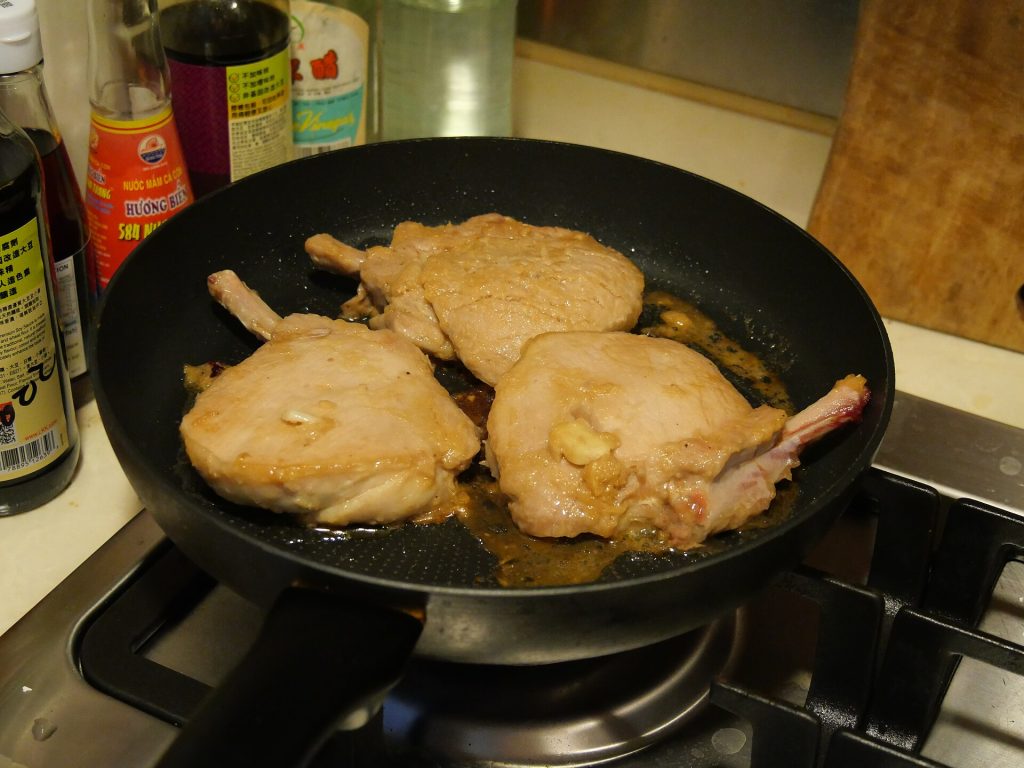
The standard explanation for a broken pan sauce is that the butter was cold, or that it went in too fast. Both are symptoms. The cause is temperature, and it is the temperature of the pan rather than of the butter.
A pan sauce is an emulsion of fat in a water based liquid. Emulsions hold while the two phases are being pushed together and fall apart when the pushing stops or the heat climbs.
Butter melts into a sauce at around 180F and separates at around 212F. A pan that is still hot enough to sear is well past the point where an emulsion can survive.
So the sauce has to be built in stages, and the fat has to go in when the pan has come down. That is the whole technique, and everything else is detail.
This works with any chop an inch thick, bone-in or boneless, and it takes about twenty minutes from a cold pan.
Why the sauce separates
Butter is about eighty percent fat and sixteen percent water, held together by milk proteins. When it melts, those proteins sit between the fat droplets and the water and keep them apart.
Above about 212F the water in the sauce boils. The steam pushes the fat droplets together, they merge, and the sauce splits into shiny pools of fat on a thin liquid.
Acid and salt help the proteins hold, which is why a squeeze of lemon or a spoon of mustard makes a sauce more stable. They are not enough on their own.
The other cause is a sauce with too little water phase. If you reduce the liquid too far, there is nothing left for the fat to be dispersed into, and it separates no matter what the temperature.
A third cause is adding cold fat to a hot pan. The butter melts unevenly, some of it seizes, and the emulsion never forms.
All three have the same correction: control the temperature, keep enough liquid, and add the fat in a controlled way.
If the sauce does break, take the pan off the heat and whisk in a teaspoon of cold water. The water re-forms the continuous phase and the fat usually comes back.
Dry surface, hot pan, and a chop that fits
Pat the chop dry on both sides and leave it uncovered in the fridge for twenty minutes if you have the time. A dry surface browns. A wet one steams and leaves no fond.
Salt the chop an hour ahead if you can, and again lightly just before it goes in. The early salt penetrates. The late salt gives the surface a crust.
Use a pan that holds both chops with an inch between them. If they touch, the sides do not brown, and the moisture between them turns to steam.
Heat the pan over medium high for two minutes before adding oil. The pan should be hot enough that a drop of water skitters, but not so hot that the oil smokes immediately.
Lay the chops in away from you, so any spitting goes across the pan rather than up your arm. Do not move them for three minutes.
The chop releases when the crust has formed. If it resists the tongs, the crust is not set, and pulling at it tears the surface and leaves the fond behind.
Stand the chops on their fat edge for thirty seconds with the tongs. That renders the rim and gives the sauce a little more fat to work with.
Do not press the chop with a spatula. Pressing pushes juice to the surface, where it cools the pan and steams the crust.
Protect the fond from the sugar in the wine
The browned film in the pan is protein and carbohydrate stuck to the metal. It is the flavor base, and it burns easily once liquid is gone.
If the pan was too hot during the sear, that film is already black at the edges. Black fond makes a bitter sauce, and no amount of butter will cover it.
Pour off the excess fat before you deglaze, but leave a teaspoon behind. Too much fat makes the sauce greasy, and none at all makes it stick and scorch.
Add the liquid off the heat. Wine or stock poured into a hot dry pan will boil hard and evaporate before it has lifted anything.
Scrape the pan floor with a wooden spoon as the liquid comes up to a simmer. The fond dissolves into the liquid, and the sauce takes on its color.
If you are using wine, let it reduce by half before adding stock. The alcohol needs to cook off, and the acidity needs to soften.
Do not use a sweet wine. The sugar caramelizes on the pan floor within seconds and turns the sauce bitter and dark.
If the fond is already black, wipe the pan out and start the sauce with a fresh spoon of fat. A bitter base cannot be rescued with butter.
Wine poured into a hot pan can flare. Take the pan off the heat before you pour it in, and keep your face back.
Reduce first, then mount
After deglazing, add the stock and reduce until the liquid coats the back of a spoon. This is the water phase, and it needs to be strong before any fat goes in.
If you add the butter before the reduction is complete, the sauce will be thin and the butter will pool on top.
Reduce over medium heat, not high. A hard boil drives off the water too fast and leaves you with a salty glaze instead of a sauce.
Add a spoon of mustard or a little tomato paste before the butter if the sauce tastes thin. Both add body and help the emulsion hold.
Have the butter cut into small cubes and cold. Cold butter melts slowly and disperses in small droplets, which is what an emulsion needs.
If you are using cream instead, add it before the reduction finishes and let it thicken. Cream is more forgiving of heat than butter.
Off the heat for the last knob of butter
Take the pan off the burner entirely before the butter goes in. The residual heat of the pan is enough to melt it without boiling the sauce.
Add the cubes one at a time, swirling the pan rather than stirring with a spoon. Swirling folds the fat through the liquid without breaking it.
Wait until each cube has disappeared before adding the next. Adding them all at once drops the temperature too far and the sauce goes oily.
If the pan feels too cool and the butter is not melting, return it to low heat for ten seconds at a time. Never to high heat.
The sauce should look glossy and slightly thickened, with no sheen of clear fat at the edges. If there is a sheen, the emulsion has failed.
Season at the very end, after the butter. Salt added earlier will have been concentrated by the reduction and the sauce will be too salty.
Add a squeeze of lemon or a few drops of vinegar last. Acid brightens the sauce and stabilises what is left of the emulsion.
If the butter refuses to melt, the sauce has gone cold. Return the pan to low heat and swirl until it just comes together.
Rest the chop in the sauce
Put the chops back in the pan, off the heat, and spoon the sauce over them. Let them sit for four minutes.
The chops reabsorb some of the sauce and give back juice, which thins the sauce slightly and seasons it with pork.
Resting on a board loses that juice to the board. Resting in the sauce keeps it in the dish, which is the practical reason to do it this way.
Slice thick chops against the grain, on a slight angle, and return the slices to the pan for thirty seconds before serving.
If the sauce tightens while you wait, loosen it with a spoon of hot water. Do not put it back on the heat.
Serve on warm plates, with the sauce spooned over the slices and a little of the pan liquid at the side.
A chop an inch thick needs four minutes. A thin cutlet needs two, and a thick double chop needs eight.
Take the chops out of the fridge and salt them on both sides. Put the pan on medium high, and measure the stock and wine into one jug.