Weeknight Dinners
Baked pasta that stays loose instead of turning to glue

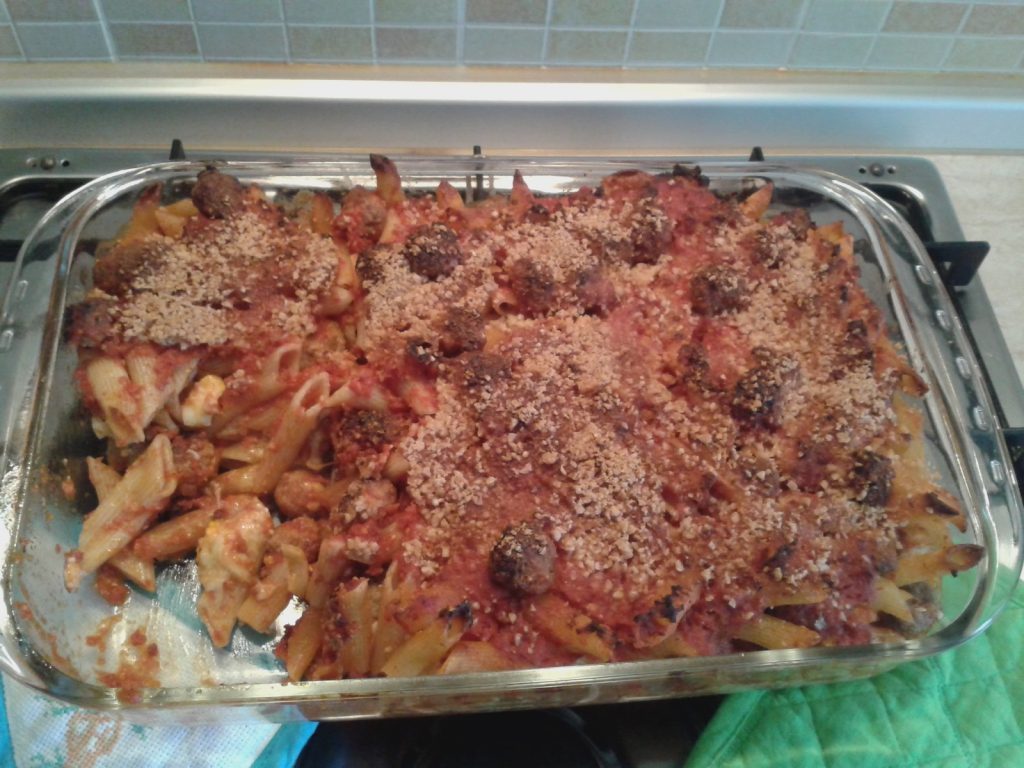
The usual explanation for gluey baked pasta is too much cheese, or a sauce that was too thick. Both are wrong. The problem is set before the dish reaches the oven.
Pasta absorbs water for as long as it is in contact with it. In a baking dish, that contact continues for half an hour at 375F, and the pasta keeps drinking.
So a dish made with pasta boiled to the recommended time and a sauce of normal thickness arrives at the table as a solid block. It is not a cheese problem. It is a water budget problem.
The fix is to change three numbers: boil the pasta less, make the sauce wetter, and stop baking sooner than feels right.
Everything below assumes a standard shallow dish, about nine by thirteen inches, and a pound of dried pasta. Deep dishes behave differently and are covered later.
Glue is starch plus time and the oven adds time
Pasta is a network of starch and protein. Dry, the starch is packed tight. In hot water it takes on water, swells, and softens.
Past the point of doneness, the swollen granules keep taking on water and begin to rupture. Ruptured granules release starch into the surrounding liquid, and that starch is the glue.
In a pot of boiling water you can stop this by draining. In a baking dish you cannot drain, so every extra minute in the oven is an extra minute of starch release.
The sauce makes it worse or better depending on how much water it holds. A thick sauce gives the pasta nothing to absorb, so it takes water from the cheese and curdles instead.
A thin sauce gives the pasta something to drink, which slows the rupture, and leaves enough liquid in the dish to keep the layers separate.
Cheese matters less than people think. Cheese pulls into strings when hot and sets when cool, but it does not turn pasta into a block on its own.
What sets into a block is starch that has been allowed to keep hydrating with no free water left around it. The dish is dry before it is gluey, and the glue is what you notice.
Boil three minutes short, and salt the water hard
Take the packet time and subtract three minutes. If the packet says eleven, drain at eight. The pasta will still have a visible uncooked core, and that is correct.
That core is your reserve. It will finish cooking in the sauce, in the oven, using liquid that is already in the dish rather than liquid you have to add later.
Salt the water at about a tablespoon per four liters. Pasta absorbs salt along with water, and this is the only chance to season the inside of the noodle.
Do not oil the water. Oil floats, coats the drained pasta, and stops the sauce from gripping the surface.
Save a mug of the cooking water before you drain. It is cloudy with starch, and a splash of it will bring a tight sauce back to the right consistency at any point.
Drain but do not rinse. Rinsing washes off the surface starch that helps the sauce cling, and it cools the pasta, which slows the oven stage.
Toss the drained pasta with a little sauce straight away, off the heat. This stops it sticking to itself while you assemble the dish.
The sauce has to be wetter than looks right
A sauce that coats a spoon nicely in the pan will be too thick for a baking dish. Aim for something that runs off the spoon in a stream, not in a sheet.
For a pound of pasta you want roughly a liter of sauce, and more if your dish is deep or your oven runs hot. That sounds like a lot. It is the amount the pasta will drink.
If you are building the sauce from canned tomatoes, add half a mug of water to the pan and stir it in. The tomatoes will thicken again as they bake.
A white sauce for baking should be thinner than a sauce for the table. Make it with more milk than the recipe suggests and let the oven reduce it.
Season the sauce slightly more aggressively than you would serve it. The pasta will dilute the seasoning as it absorbs, and the cheese will add salt on top.
Mix the pasta and sauce in a bowl rather than layering them in the dish. Every piece gets coated, and there are no dry pockets in the middle.
If the mixture looks soupy in the bowl, that is the right look. If it looks like finished pasta salad, add another half mug of water or stock.
Layering traps water where it cannot escape
Alternating sheets of pasta and spoonfuls of sauce creates sealed pockets. Steam forms in those pockets and cannot get out, so the centre of the dish turns wet while the top dries.
Mixing everything together gives the liquid a continuous path to the surface. It evaporates evenly instead of collecting in one layer.
If you want a layered dish, keep it to two layers and make the sauce wetter. A thin layer of sauce on the base of the dish stops the bottom pasta from sticking.
Deep dishes are the main cause of the soggy middle. A shallow dish, about two inches deep, exposes more surface per portion and lets water leave faster.
If your only dish is deep, reduce the oven time by ten minutes and increase the uncovered part of the bake.
Cover the dish with foil for the first half of the bake only if the top is browning too fast. Foil traps steam, and steam is what you are trying to get rid of.
Leave the dish uncovered for the whole bake if you can. The top will brown, the middle will set, and the pasta at the edges will crisp, which is the best part.
Test at the end of the bake with a knife in the centre. It should meet slight resistance and come out with sauce on it. A clean blade means the dish is dry.
The rest off the heat is part of the bake
Pull the dish when the sauce is bubbling at the edges and the centre is still slightly loose. If a knife comes out clean, the dish has gone too far.
Set it on a board and leave it for ten minutes. The pasta stops drinking, the starch settles, and the portions cut cleanly instead of sliding apart.
Cutting into it immediately is what produces the puddle on the plate. The dish is not gluey at that moment, it is simply unstructured.
If the rest goes too long and the dish sets firm, loosen it with a splash of hot water and a spoon, working from the edges in.
Test at the ten minute mark by pressing the centre with a finger. Springy and set means serve. Soft and yielding means five more minutes in a low oven.
Do not return the dish to a hot oven to reheat it later. The microwave, covered, at half power, is gentler on the texture.
Cut portions with a sharp knife and lift them with a spatula rather than a spoon. A spoon compresses the layers and squeezes the sauce to the edges.
Reheating a portion without a second bake
A cold portion of baked pasta is dense and dry. Reheating it in a hot oven drives off more water and makes it denser still.
Put the portion in a shallow bowl, add a tablespoon of water, cover loosely, and heat at half power in short bursts. The trapped steam rehydrates the surface starch.
Stir once between bursts. You are looking for loose, separate pieces, not a hot block.
If you are reheating the whole dish, add a splash of sauce or water, cover with foil, and use a lower oven, around 325F, for twenty minutes.
A portion frozen flat in a bag reheats better than a portion frozen in a block, because it thaws evenly and does not need long heat at the centre.
Thaw overnight in the fridge if you can. A frozen centre forces you to overheat the outside to get the middle warm.
Reheat only the portion you will eat. A dish warmed twice has been cooked three times, and the starch has nothing left to give.
Fill a large pot with water and set it to boil now, before anything else. While it heats, make the sauce thin enough to run off a spoon.