Heat and Timing
Boiling versus simmering and what each does to pasta and beans

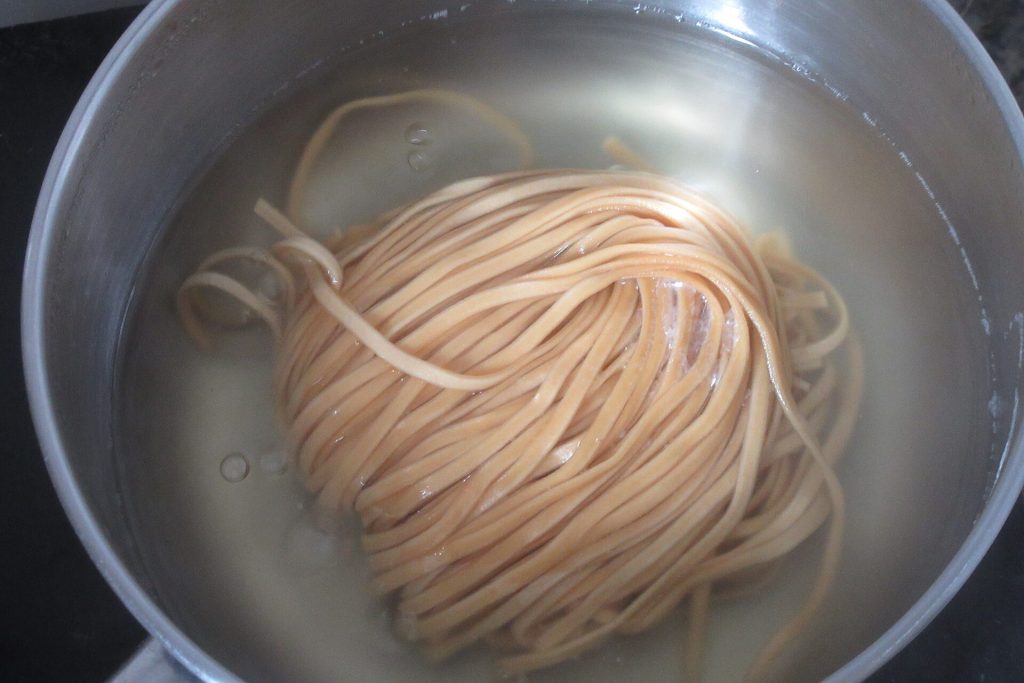
The instruction to hold a large pot at a rolling boil comes from habit rather than from anything the food needs. Water cannot get hotter than its boiling point, so a harder boil adds nothing to the cooking.
What it adds is movement, evaporation and a faster loss of water from the pot. Sometimes that is useful. Often it is not.
Pasta and beans want opposite things from the same pot, and the difference starts with how much the water is moving.
What a boil is, and what more heat cannot do
At sea level water boils at 212F. Add more flame and the water does not get hotter. It turns to steam faster.
That is the whole physics of the pot. The temperature is fixed by pressure, and a domestic burner can only change the rate at which water leaves.
A rolling boil is water leaving fast. The bubbles are steam, and the violence at the surface is vapor escaping, not heat entering the food.
So a hard boil cooks at the same temperature as a gentle one and burns more fuel for it. The real differences are mechanical: agitation, evaporation, and how much the food is knocked around.
A simmer sits ten to twenty degrees below the boil. Small bubbles form at the base and rise slowly, and the surface shivers without breaking.
Heat reaches the water through the base, and the base is the only part of the pot touching the flame. A wide flat base transfers more of the burner’s output than a narrow one.
A lid shifts that balance more than the dial does, because it traps the steam that would otherwise carry heat away.
Pasta does not need a rolling boil
Dried pasta is a starch and protein matrix with very little water inside. It cooks by absorbing water and setting its starch, and both happen well below a boil.
A strong simmer is enough. The pasta softens at the same rate, and the pot is easier to control.
Fresh pasta is the exception. It is already soft and cooks in two minutes, and a rolling boil helps it separate instead of clumping.
Sticking is usually blamed on the water not boiling hard enough. It is nearly always too little water or no stirring in the first minute.
Starch on the surface of dry pasta turns to glue while the pieces are still rigid. Stir once at the start and again after a minute, and they stay apart.
Water volume matters for a different reason. It dilutes the starch so the pieces do not sit in a paste, and a wide pot does that better than a tall one.
Oil in the water does nothing useful. It floats, and the pasta that comes out of it is slippery, which is the last thing a sauce wants.
Salt seasons the pasta and does not raise the boiling point in any amount a cook would use. A tablespoon in four liters shifts it by a fraction of a degree.
The shape of the piece decides how much water it needs. Long strands want a pot wide enough to lie down in. Short shapes will cook in a saucepan.
A hard boil does help with one thing. It keeps the surface moving so sheets and long shapes do not nest together, which is why lasagna sheets belong in a fast pot.
Beans want the opposite treatment
Beans are seeds with a skin and a starchy interior, and the skin is the part that suffers. A hard boil makes it split and peel away from the inside.
Once the skin splits, the interior spills starch into the water. The pot clouds, the bean loses its shape, and the liquid thickens toward soup.
A gentle simmer softens the skin at the same rate as the interior. The bean swells, the skin stretches, and it stays whole.
The test is to press a bean between two fingers. A well cooked bean crushes with slight pressure and keeps its outline. A boiled one collapses into paste.
Acid slows the softening. Adding tomatoes, wine or vinegar at the start will keep beans firm for a long time, sometimes longer than you want.
Salt added early helps the skin soften evenly, because it works on the pectin from the outside in. The old warning about salting at the end came from hard water and older varieties.
Hard water is the real variable. Calcium reinforces the pectin and keeps skins tough, which is why the same beans cook differently in two kitchens.
Soaking is optional. It shortens cooking by twenty minutes or so and evens out how fast the skins take up water.
Very old beans never soften, however gently they are cooked. Their pectin has changed with age, and no amount of simmering reverses that.
A quarter teaspoon of baking soda makes the water slightly alkaline and softens the skin faster. Too much turns the beans slippery and leaves a soapy taste.
What the movement does to texture
Agitation is the second difference between the two heats, and it works on the outside of the food.
In a rolling boil, pieces tumble against each other. The surface is abraded, starch rubs off, and the water becomes a thick slurry.
For pasta that slurry is useful. It is what makes a sauce cling, and a fast pot gives you more of it.
For beans the same abrasion is damage. Skins wear thin where beans collide, and those are the spots that break first.
For a stew or a braise, agitation is the enemy of the shape you want. A simmer keeps pieces whole. A boil turns them into a uniform mass.
For stock the reverse holds. A hard boil breaks fat into the liquid and makes it cloudy, so a clear stock needs the gentlest heat you can hold.
Rice and grains sit between the two cases. They want a bare simmer with the lid on, and a boil drives starch out through the surface.
Telling one from the other without a thermometer
Look at the surface. A simmer shows a few small bubbles rising in a slow column, and the surface shivers rather than rolls.
A boil shows chains of large bubbles and a surface that turns over on itself. The sound moves from a low hum to a steady roar with a hiss on top.
If you want a number, a simmer sits around 185F to 195F. A gentle boil is 200F to 205F. A rolling boil is 212F and cannot go higher.
Lid on or off changes the picture. A lid traps heat and pushes a simmer toward a boil, and it also returns condensate to the pot, which matters for a reduction.
Pot shape matters too. A wide pot loses more heat from its surface and needs a higher flame to hold the same movement.
A thin pot rattles audibly at a hard boil because the base is flexing. That rattle is heat going into the metal rather than into the water.
Setting the heat for the next ten minutes
Put a pot of water on and watch the first bubbles. When small bubbles form on the bottom and rise in a thin stream, turn the burner down until they almost stop.
That setting is your simmer. Note where the dial sits, because it will be the same on that burner for a pot of that size.
For pasta, salt at about a tablespoon per four liters and add the pasta at a strong simmer rather than a roar.
Stir once, then again after a minute. After that, stir occasionally so the pieces on the bottom move.
For beans, start in cold water, bring to a bare simmer over medium heat, and hold there. Skim the foam once and leave the lid ajar.
Check the first bean at forty minutes, then every ten. The window between firm and falling apart is narrow, and a boil makes it narrower.
If the pot climbs to a boil by accident, add a splash of cold water and lower the heat. Beans survive one interruption.
Listen rather than watch once you know the sound. A simmer hums and a boil roars, and the pot tells you which one you have before the food does.
Tonight, bring a pot to the boil, turn it down until the bubbles slow to a trickle, and cook your pasta there. Time it against your usual method.
It will finish within a minute of the usual time, and the water will be less cloudy and the pot easier to handle.
Then cook a pot of beans the same way and press one between your fingers. If it holds its shape, the heat was right.