Heat and Timing
Oven hot spots and when rotating a tray actually helps

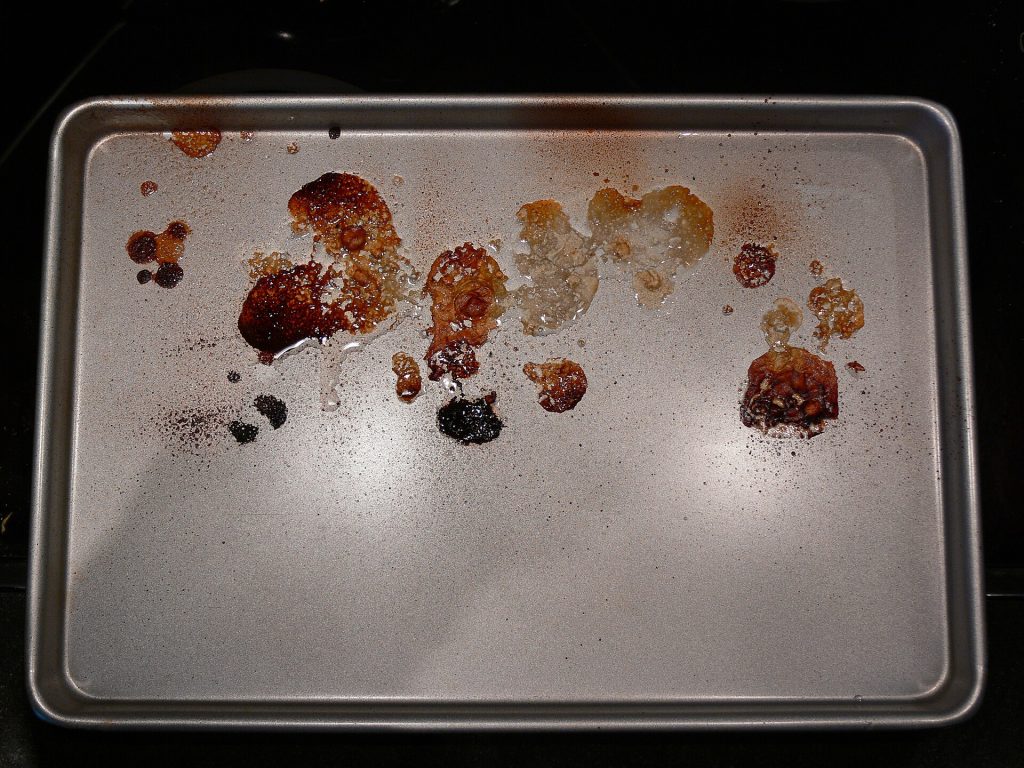
Rotating the tray halfway through is applied to everything that goes into an oven. In most ovens it matters for a few foods and does nothing for the rest, and the habit costs more heat than it returns.
The tray does not cook evenly, but the reason is not a mystery. It is the shape of the heat source and the shape of the box around it.
Knowing where the hot zones are turns rotation from a ritual into a decision you make once per tray.
Where the heat in an oven actually comes from
A domestic oven is a metal box with an element at the bottom, at the top, or hidden behind a panel, and often a fan at the back.
Radiant heat travels in straight lines. A tray under a top element receives more of it at the center, directly below the coil, than at the edges.
Heat also rises. The top of the cavity is warmer than the bottom by 25F to 50F in many ovens, which is why an upper rack browns faster.
The walls matter as much as the air. The back wall sits close to the burner and against the cabinet, and it is often the hottest surface in the box.
A fan changes all of it. Moving air evens out the temperature and blunts the radiant hot spot, at the cost of drying the surface of the food.
Most ovens also cycle. The element switches on and off around a set point, so the true temperature swings ten or fifteen degrees around the number on the dial.
Accuracy is looser than the dial suggests. Many ovens sit 25F above or below the setting, and the error is consistent, which makes it easy to learn and hard to notice.
A hidden bottom element leaves a hot stripe where the plate above it is thinnest. That stripe browns the middle of a tray of cookies before the edges.
Gas and electric recover differently. Gas heats the air quickly and dries it, while electric coils hold heat in the metal and give it up more slowly.
The element’s own shape shows up in the food. A circular coil browns a circular patch, and a tray of rolls will show that ring plainly.
Finding the hot spots in your own oven
You do not need a thermometer to map it. A single layer of sliced bread on a tray will show you in eight minutes.
Put the tray on the middle rack and watch. The slices that darken first mark the hot zones, and the pattern repeats every time you bake.
A dusting of sugar on parchment works faster. Sugar browns at a lower temperature than bread toasts, so the gradient appears as a color map.
Do this once and note the result. Most ovens run hot at the back left or back right and cool at the front, where the door glass loses heat.
The door is a cold wall. Food near the glass browns slowly and can stay pale while the back of the same tray is dark.
An oven thermometer tells you about the air, not about radiant heat. Hang one in the center and it will read the average, which is exactly the number that hides the hot corner.
Tray color changes the result. A dark tray absorbs radiant heat and browns the food at its edges faster than a light tray does.
Repeat the test on the upper and lower racks, because the map changes with height. The hot corner moves as the tray gets closer to the element.
When rotating the tray helps
Rotate when one tray fills most of the oven and the food is browning unevenly. That covers most sheet pan dinners and most batches of roasted vegetables.
Turn the tray end for end at the halfway point and swap front for back. A quarter turn is rarely needed unless the pattern is clearly diagonal.
Rotate early rather than late. Browning that happens in the last five minutes cannot be undone, and a tray turned at the halfway mark browns evenly from then on.
Rotate anything that cooks by radiant heat: food under a broiler, food on the top rack, food with a crust you want even.
Rotate large items that will be carved and seen whole. A chicken with one dark side looks wrong on the board even when it is cooked correctly.
Rotate the pan and not the food. Moving pieces with a spatula breaks the crust and redistributes the fat, and the pan is what is uneven.
For fast food, rotate at two thirds rather than halfway. A thin tray of vegetables may be nearly done at the halfway point, and the useful correction comes later.
A tray that covers the whole rack blocks air from moving around it. That is why a full sheet pan browns more unevenly than a small one holding the same food.
When rotating does more harm than good
Every time the door opens the cavity loses heat. A tray out of the oven for fifteen seconds drops the air temperature by 25F or more, and the element has to recover.
Cakes and souffles are the clearest case. A batter that is rising depends on steady heat, and a draft at the wrong moment collapses the structure.
Bread is similar. The first ten minutes set the crust and the rise, and a door opened in that window costs volume that cannot be recovered.
Custards and cheesecakes suffer from the movement as much as the cold. A tray slid across a rack can ripple a surface that has just begun to set.
Meringue is the extreme case. It is mostly air held in a fragile structure, and a drop in temperature deflates it before the outside has dried.
Small items on a small tray near the center of a well behaved oven need no rotation at all. They sit in one zone and brown evenly by definition.
Convection ovens need less of it, because the fan is already doing the work. If the fan is on, look before you open the door.
Opening the door also dumps humidity. That moisture is part of how a crust forms in the first minutes, and losing it early gives a duller surface.
If you must open, do it fast and close it faster. Have the rotation done in three seconds, with the tray already pulled to the front edge.
Rack position does more than rotation
Most uneven browning is a rack problem wearing a rotation costume. Moving the tray down one level changes the result more than turning it.
The middle rack is the default for a reason. It sits between the top heat and the bottom heat, furthest from both hot walls.
For a crisp base, go low. For a browned top, go high. For an even bake, stay in the middle and rotate once.
Two trays at once is the hardest case. Heat between them is shared, and the lower tray blocks the upper one from the bottom element.
If you must use two racks, swap their positions rather than rotating each. That exchanges the hot zone instead of averaging it.
Leave a gap between the trays and the walls. Air has to move around the pan for heat to spread, and a tray touching the back wall creates its own hot spot.
A pizza stone or a heavy pan in the bottom of the oven adds thermal mass. The oven recovers faster after the door closes, and the swing around the set point shrinks.
A warped tray is one more variable. Its corners lift toward the element, catch more radiant heat, and brown first wherever you place it.
What to do in the next ten minutes
Set the oven to 375F, lay a single layer of bread slices on a tray, and set a timer for eight minutes.
When the timer goes, look through the glass before you open the door. The darkest slices mark your hot corner.
Write that corner on a note and keep it inside a cupboard door. It will still be true in five years.
Next time you roast vegetables, put the tray in with the hot corner at the back, and turn it end for end at the halfway point.
Then leave the door shut until the timer and compare the color across the tray. The difference is the measure of how much rotation your oven needs.
If the tray comes out even, stop rotating. The habit was costing you heat and buying nothing.